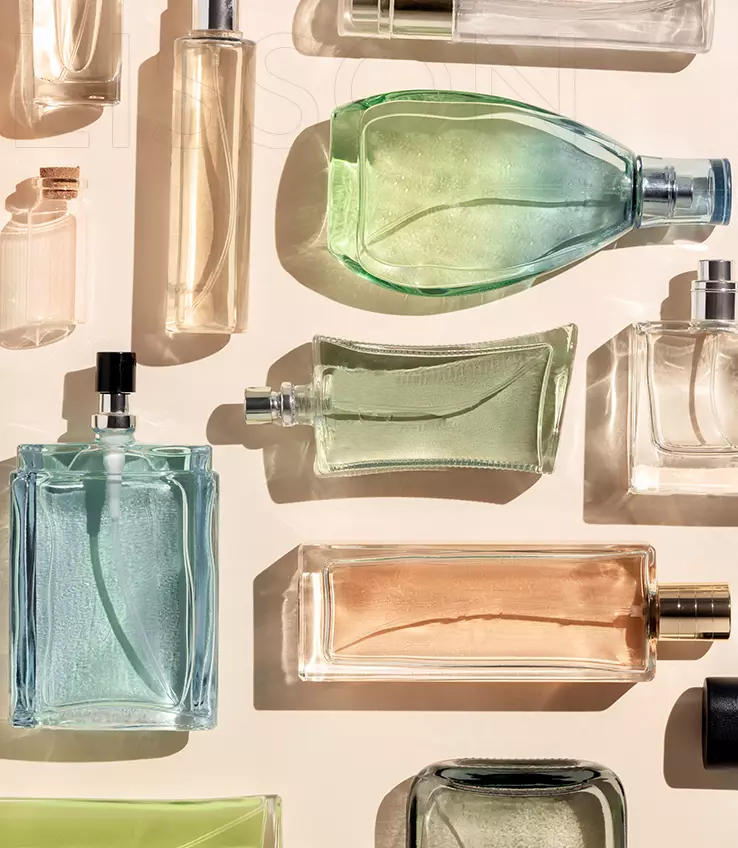




Approving a cosmetic bottle sample is an important milestone in packaging development, but it does not automatically mean that the bottle is ready for full-scale filling.
A sample may look attractive and meet the required capacity, yet problems can still appear when the bottle enters an automated filling line. The bottle may not move smoothly along the conveyor, the filling nozzle may not fit correctly, or the selected pump and cap may fail during high-speed assembly.
For skincare brands, private-label manufacturers, and cosmetic packaging buyers, testing a new bottle before mass production helps identify these issues while there is still time to make adjustments.
So, how can cosmetic brands test a new glass bottle before full-scale filling? The best approach is to evaluate the bottle itself, the complete packaging system, and the actual filling process under representative production conditions.
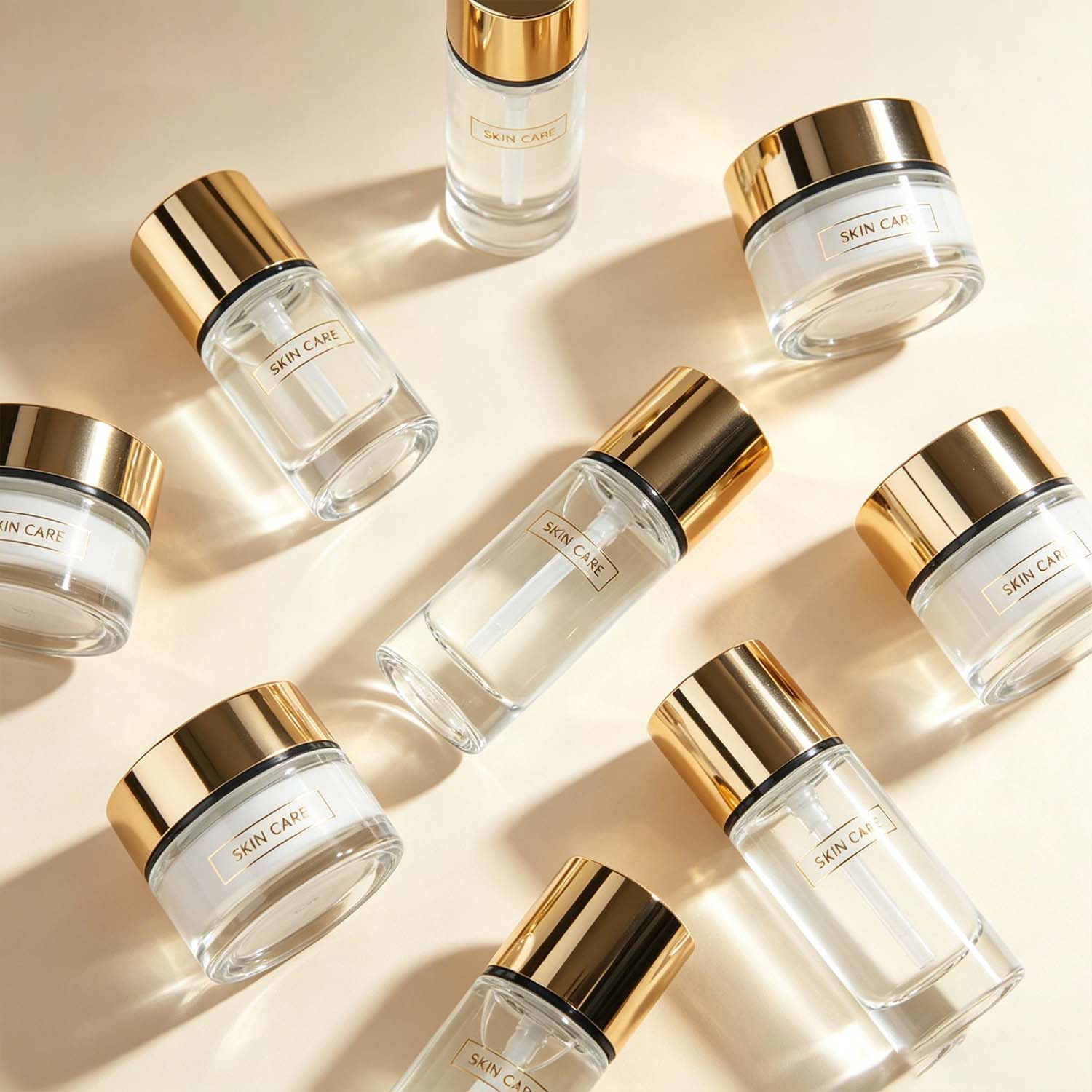
Why Should Brands Test New Cosmetic Bottles Before Full-Scale Filling?
Full-scale filling involves several connected operations, including bottle feeding, positioning, filling, capping, labeling, inspection, and final packing.
A bottle must perform consistently throughout this process. Even a relatively small dimensional difference can affect how the container moves through production equipment.
Pre-production testing helps brands identify:
- Bottle dimensions that do not match filling equipment requirements.
- Unstable bottle positioning during conveyor movement.
- Filling nozzle clearance or alignment problems.
- Inconsistent cap or pump assembly.
- Labeling and decoration positioning issues.
- Leakage or sealing problems after filling.
- Damage caused by handling and transportation.
Finding these problems during sample evaluation is generally more manageable than discovering them after thousands of bottles have been filled.
For brands sourcing glass skincare packaging, pre-production validation should be part of the packaging approval process rather than an optional final check.
Inspect Bottle Appearance and Critical Dimensions
Before conducting filling trials, start with a basic inspection of the bottle samples.
Check whether the received samples match the approved design, drawings, and specifications.
Important inspection points include:
- Overall bottle height.
- Body diameter and shape.
- Base diameter and stability.
- Neck opening and neck finish dimensions.
- Specified capacity and fill volume requirements.
- Glass wall appearance and surface condition.
- Color consistency and decorative finish.
For glass bottles, also inspect for visible cracks, chips, scratches, bubbles, uneven coloring, and other defects against the agreed quality criteria.
Dimensional consistency is particularly important when the packaging will be used with automated filling and capping equipment.
A bottle that is slightly different in height or diameter may require changes to guide rails, filling heads, or other production settings.
Brands should retain an approved reference sample and compare subsequent samples or production batches against the same specifications.
Confirm That the Bottle Fits the Intended Filling Equipment
One of the most important pre-production checks is confirming that the new bottle can run on the factory's filling line.
Different filling machines have different requirements for container height, diameter, opening dimensions, and positioning.
During the filling line trial, evaluate:
- Whether the bottle can be fed into the line smoothly.
- Whether it remains stable on the conveyor.
- Whether the filling nozzle aligns with the bottle opening.
- Whether the nozzle has sufficient clearance.
- Whether the bottle can move through the line without excessive contact.
- Whether the filling station can maintain consistent positioning.
Pay particular attention to the bottle base. An unstable base may cause tipping or movement during filling, capping, and conveying.
For square, oval, or specially shaped glass bottles, guide rail adjustments may be necessary depending on the equipment configuration.
Brands should test the actual bottle design on the intended production line whenever possible rather than assuming that a visually similar bottle will behave identically.
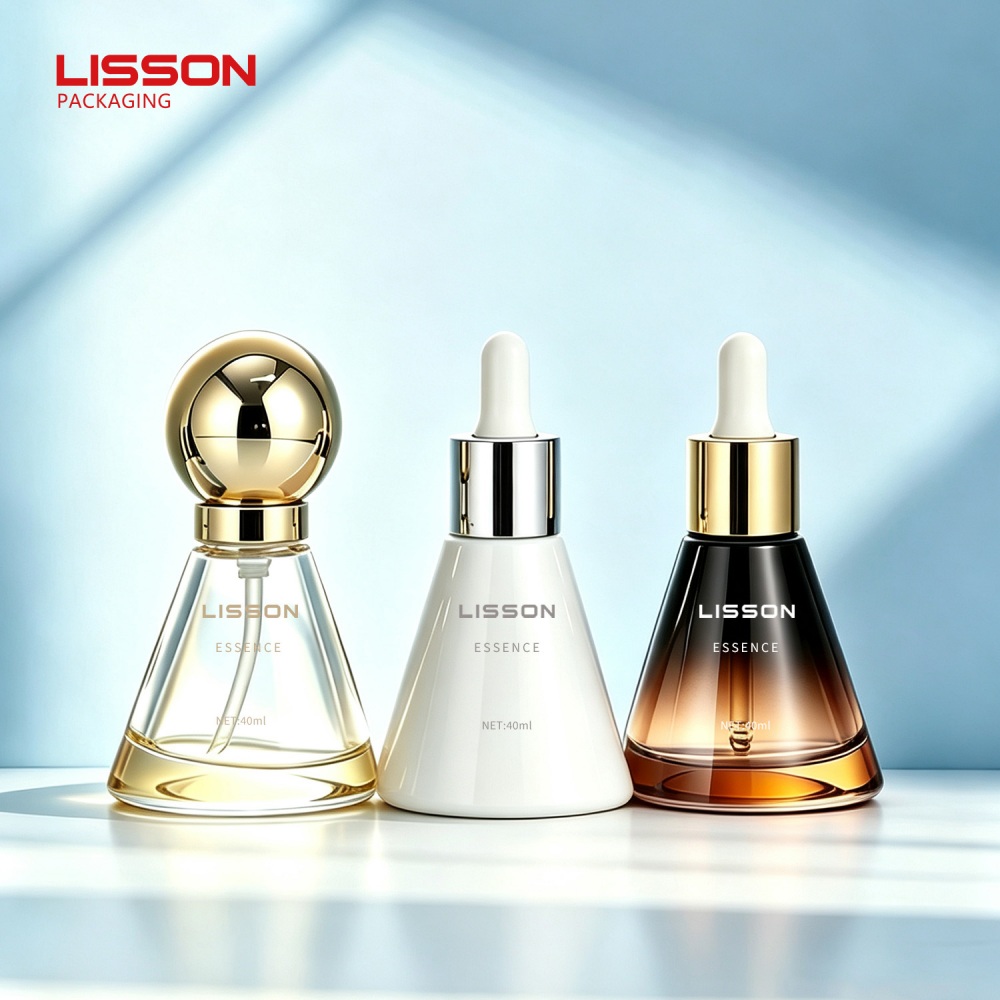
Test the Bottle With the Actual Cosmetic Formula
A filling trial should use the intended skincare formulation whenever practical.
Different formulas can behave differently during filling. Water-based toners, lightweight serums, thick lotions, and oil-based treatments may require different filling conditions.
For example, a highly fluid formula may splash or foam if the filling process is not properly adjusted. A thicker lotion may require different filling speeds or nozzle arrangements.
During the trial, observe:
- Whether the formula flows consistently through the filling system.
- Whether the bottle opening allows sufficient filling nozzle clearance.
- Whether splashing or excessive foaming occurs.
- Whether the target fill volume can be maintained.
- Whether the filling process leaves excessive product residue around the neck.
- Whether the filled bottle remains clean and stable during subsequent handling.
Also consider the product's viscosity at the expected filling temperature. A formula may behave differently during production than it does at room temperature during laboratory evaluation.
If the actual commercial formula is not available, a representative test material may be used for preliminary mechanical trials. However, final validation should include the intended formula whenever practical.
Evaluate Cap, Pump, and Dropper Assembly Performance
A new glass bottle must work with its intended closure and dispensing components.
Even if the bottle passes dimensional inspection and filling tests, an incompatible pump or cap can still cause problems during assembly.
For screw caps, check:
- Thread engagement and tightening consistency.
- Whether the cap sits evenly on the neck.
- Whether the sealing liner or gasket is correctly positioned.
- Whether the cap loosens during handling.
For lotion pumps, check:
- Correct pump fit on the bottle neck.
- Dip tube length and positioning.
- Priming and dispensing consistency.
- Leakage around the pump assembly.
- Compatibility with automated capping equipment.
For glass dropper bottles, check:
- Dropper cap engagement.
- Pipette length and internal clearance.
- Bulb recovery and liquid intake.
- Dispensing performance.
- Closure sealing after repeated use.
Brands can explore LISSON's Glass Dropper Bottle Collection when evaluating different serum packaging designs and dispensing configurations.
Check Filling Accuracy and Final Package Appearance
Once the bottle has been filled and closed, inspect the complete package rather than focusing only on the filling machine's output.
Important checks include:
- Actual fill volume or net product quantity.
- Consistency of filling across multiple samples.
- Cleanliness of the bottle neck and exterior.
- Correct closure position.
- Absence of visible leakage.
- Appearance of the finished bottle.
For premium skincare products, even minor cosmetic defects can affect the perceived quality of the final package.
For example, product residue around the neck, fingerprints on a glossy coating, or inconsistent label positioning may make a finished product look less professional.
Brands should define acceptable filling tolerances and visual quality standards before the production trial begins.
Verify Labeling, Printing, and Decorative Finish
Packaging decoration should also be evaluated using production-representative samples.
Glass cosmetic bottles may use different decorative treatments, including screen printing, frosting, spray coating, metallic finishes, and customized color effects.
Before full-scale filling, check:
- Whether labels fit the bottle's surface geometry.
- Whether the printed logo is correctly positioned.
- Whether colors match the approved artwork.
- Whether the decorative coating is consistent.
- Whether the label or decoration remains intact during normal handling.
- Whether filling and capping equipment can handle the decorated bottle without damage.
Specially shaped bottles may require customized labeling fixtures or adjustments to automated labeling equipment.
For brands developing coordinated product collections, LISSON's custom glass cosmetic packaging range offers different bottle designs and decoration options for evaluating the final product presentation.
Conduct Leakage and Transportation Tests
Passing the filling line trial does not automatically confirm that the packaging is suitable for distribution.
The filled and closed bottle should also be evaluated under relevant storage, handling, and transportation conditions.
Depending on the product and distribution route, testing may include:
- Leakage checks in different package orientations.
- Closure retention and loosening inspections.
- Vibration testing.
- Appropriate drop or impact testing of the packaged product.
- Temperature exposure or cycling.
- Carton and protective packaging evaluation.
These tests help determine whether the glass bottle, closure, and outer packaging can withstand the expected distribution environment.
For glass packaging, transportation testing should consider not only liquid leakage but also bottle-to-bottle contact, carton support, divider design, and potential breakage risks.
The appropriate test methods and acceptance criteria depend on the bottle design, filled product, shipping method, and applicable customer requirements.
Use a Pre-Production Bottle Approval Checklist
Before authorizing full-scale filling, cosmetic brands should document the results of the sample evaluation.
The following checklist can help purchasing, quality, and production teams review the same requirements:
| Validation Stage | Key Inspection Points | Approval Objective |
|---|---|---|
| Bottle Inspection | Dimensions, capacity, appearance, and defects | Confirm bottle specifications |
| Filling Line Trial | Positioning, feeding, nozzle clearance, and stability | Confirm production equipment compatibility |
| Formula Trial | Flow, foaming, filling accuracy, and cleanliness | Confirm filling performance |
| Closure Test | Fit, sealing, tightening, and dispensing | Confirm complete package compatibility |
| Decoration Inspection | Printing, coating, labels, and appearance | Confirm visual consistency |
| Transport Testing | Leakage, vibration, impact, and breakage risk | Confirm distribution suitability |
| Final Approval | Test records and approved reference sample | Authorize mass production |
A clear approval record should identify the bottle model, closure specification, formula, decoration, and relevant production conditions. This helps prevent unauthorized component substitutions after sample approval.
What Should Brands Do If a Bottle Fails the Pre-Production Test?
If a new bottle fails during testing, the next step is to identify the source of the problem before making changes.
For example, leakage may be caused by an incompatible neck finish, an incorrectly positioned liner, or unsuitable closure assembly conditions. Filling problems may instead be related to bottle dimensions, formula flow, or machine positioning.
Brands should record the failure, identify the affected component, and discuss corrective actions with the packaging supplier and filling line team.
After adjustments are made, repeat the relevant tests using the updated packaging configuration.
Do not approve full-scale production simply because one sample appears acceptable after an unverified adjustment. The final configuration should be tested and documented.
How LISSON Helps Brands Develop Glass Cosmetic Packaging
Choosing a suitable glass bottle involves more than selecting a design from a product catalogue. Brands also need to consider bottle dimensions, closures, dispensing performance, decoration, and production requirements.
LISSON provides glass cosmetic packaging options for skincare brands, including serum dropper bottles, glass skincare bottles, pump packaging, and coordinated bottle-and-jar sets.
When discussing a new packaging project, brands can prepare their product type, target capacity, bottle design preferences, closure requirements, filling method, and customization details.
This information helps the packaging supplier understand the project and evaluate suitable packaging options before sample approval and full-scale filling.
If you are developing a new skincare product or changing your existing packaging, visit LISSON's official website to explore glass cosmetic packaging solutions.
Frequently Asked Questions About Testing Cosmetic Bottles Before Filling
Why should a cosmetic bottle be tested before full-scale filling?
Testing helps confirm that the bottle fits the filling equipment, works with the intended closure, supports accurate filling, and meets appearance and transportation requirements before mass production.
Which bottle dimensions are important for filling line compatibility?
Important dimensions include overall height, body diameter, base diameter, neck opening, and neck finish. These affect bottle positioning, filling nozzle clearance, conveyor movement, and closure assembly.
Should brands use the actual skincare formula during bottle testing?
Whenever practical, yes. Actual formula viscosity, foaming behavior, and filling characteristics may affect production performance. A representative substitute can be used for preliminary mechanical trials, but it should not replace final formula validation.
Can a bottle pass a filling test but fail during capping?
Yes. Filling and capping equipment have different requirements. The bottle neck, closure dimensions, thread design, and assembly conditions must also be checked.
How many samples should be tested before mass production?
The required sample quantity depends on the test plan, production equipment, product risk, and customer acceptance criteria. A single sample is generally insufficient to establish consistent performance across a production process.
What should be approved before ordering a full production batch?
Brands should approve the bottle specifications, closure configuration, formula compatibility, filling line performance, decoration, leakage results, and relevant transportation test results. An approved reference sample and test record should also be retained.