



A cosmetic glass bottle may pass the initial sample inspection but fail when tested on an actual filling line. Problems can appear as bottle jams, unstable movement, filling inaccuracies, closure defects, label misalignment, or even cracked glass.
These failures do not always indicate that the bottle itself is defective. In many cases, the result comes from a mismatch between the bottle design and the equipment, the closure system, or the operating conditions of the production line.
For cosmetic brands, identifying the cause of a filling line trial failure is essential before approving mass production. This article explains the most common failure types, their possible causes, and what buyers should investigate.
Why Do Cosmetic Glass Bottles Fail During Filling Line Trials?
A filling line trial evaluates the performance of the complete packaging system. The bottle must move through the production line, receive the correct product volume, accept its closure, and pass through subsequent labeling and packing operations.
A problem at any stage can affect the trial result. For example, a bottle with an unsuitable base diameter may become unstable on the conveyor, while a neck finish that does not match the closure may cause capping problems.
Successful sample approval should therefore include both visual and functional evaluation. A bottle that looks attractive on a display table may still need adjustments before it can run efficiently on automated equipment.
Bottle Jams May Be Caused by Dimensional Mismatch
One common filling line problem is bottle jamming during conveying or transfer between stations. This may happen when the bottle's body diameter, height, or shape does not match the conveyor guides and machine clearances.
If the bottle is too wide, it may contact guide rails or neighboring containers. If it is too narrow, it may move unevenly or fail to remain in the correct position. Bottles with unusual shoulders or decorative shapes may also require additional clearance.
To investigate a jam, compare the actual bottle dimensions with the equipment specifications. Check the points where the bottle stops, rotates, or makes contact with surrounding components.
Bottle Instability Can Interrupt the Filling Process
Glass bottles need a stable base to move safely through the filling line. If a bottle wobbles, tilts, or tips during conveying, it may cause filling inaccuracies, product spills, or production interruptions.
Potential contributing factors include an unsuitable base diameter, uneven bottom contact, an off-center center of gravity, or insufficient support from the conveyor system.
Tall and narrow bottles may be more sensitive to stability problems than wider containers. However, the result depends on the overall bottle geometry and the equipment configuration.
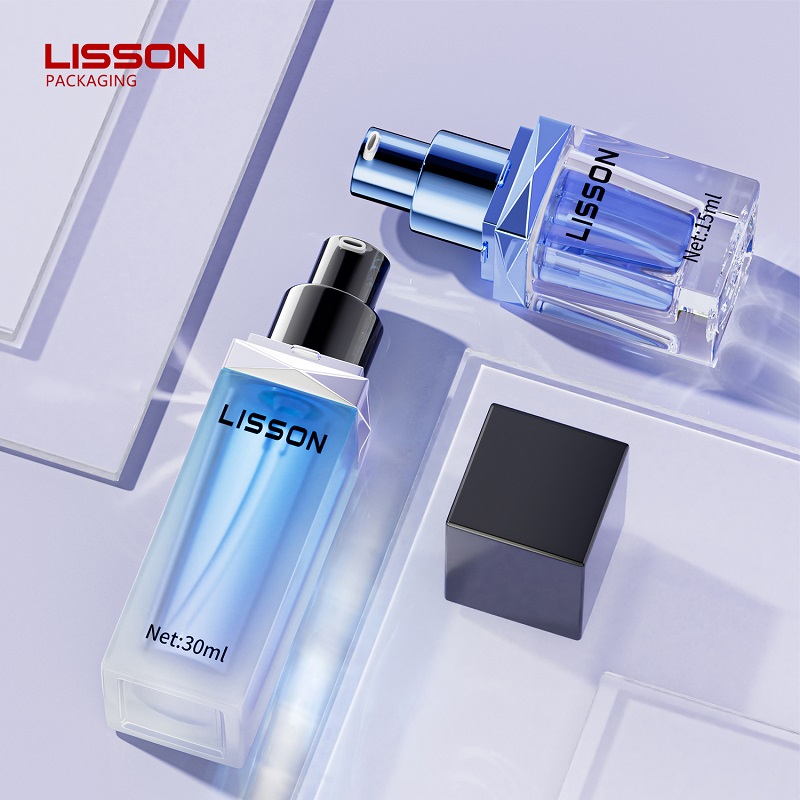
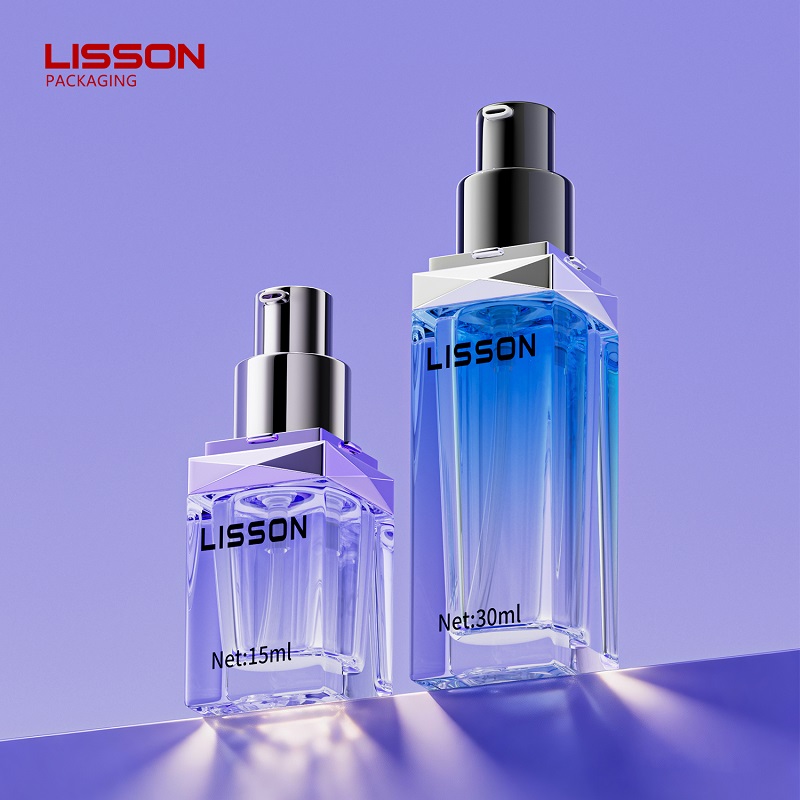
Brands should observe the bottle at normal production speed and pay attention to transfer points, curved conveyor sections, and accumulation areas. A tapered glass essence bottle with a dropper, for example, should be evaluated for its actual base support and handling requirements before use on an automated line.
Filling Inaccuracies May Come From Nozzle Position or Bottle Alignment
Incorrect filling volume or product splashing can occur when the bottle is not positioned properly beneath the filling nozzle. The opening size, neck height, bottle alignment, and nozzle clearance all influence the filling process.
If the nozzle is too close to the bottle opening or does not align with the center, product may splash onto the neck or outside surface. This can create cleaning problems and affect the appearance of the finished package.
Product characteristics should also be considered. High-viscosity liquids, foaming formulas, and products with different flow properties may require adjustments to the filling parameters.
During the trial, check the actual filling volume, nozzle position, filling speed, and product residue around the bottle opening. Use the intended formula or a representative liquid whenever possible.
Capping Failures May Be Related to Neck Finish Compatibility
A bottle can pass the filling stage but fail during capping. This often happens when the neck finish, closure dimensions, or capping equipment settings are not properly matched.
Possible symptoms include caps sitting unevenly, pumps becoming difficult to install, closures appearing loose, or excessive force being required during assembly.
For cosmetic bottles with pumps or droppers, the complete packaging assembly should be evaluated. The bottle neck, closure, internal components, and assembly process all influence the final result.
Brands should confirm the bottle opening dimensions and closure specifications before the filling line trial. If the closure supplier and glass bottle supplier use different dimensional references, the assembly should be checked carefully before production approval.
Glass Cracks and Chips May Result From Contact or Pressure
Glass damage during filling line trials can occur when bottles collide with each other, contact machine components, or experience excessive localized pressure.
Potential risk areas include the bottle base, shoulder, neck, and sidewall. Damage may happen at transfer points, during accumulation, or when the bottle is positioned incorrectly beneath a machine head.
When a crack or chip appears, brands should record the exact location and the production stage. Check whether the bottle contacted a guide rail, another bottle, a filling nozzle, or a capping component.
It is also important to inspect the bottle before the trial. If a bottle already has a chip or surface defect, the filling line may reveal the weakness under normal handling conditions. The failure should be investigated rather than automatically attributed to either the supplier or the equipment.
Labeling Problems Can Be Caused by Bottle Shape and Surface Finish
After filling and capping, cosmetic glass bottles may pass through automatic labeling equipment. Labeling problems can occur when the bottle surface is curved, uneven, tapered, or unsuitable for the selected label material.
Common symptoms include label wrinkles, bubbles, poor alignment, lifting edges, or inconsistent positioning. Coated and frosted surfaces may also require specific evaluation because their surface characteristics can affect label adhesion.
Before approving the bottle, brands should check the available label area, surface finish, bottle shape, and labeling machine settings. The trial should use the intended label material and artwork whenever possible.
Excessive Production Speed Can Reveal Hidden Compatibility Issues
A bottle may perform well during a slow manual test but become unstable when the filling line operates at its intended speed. Higher speeds can increase the effects of bottle spacing, conveyor movement, transfer timing, and equipment alignment.
For this reason, a filling line trial should not rely only on a few bottles passing through the equipment at low speed. The production team should observe performance under representative operating conditions.
If problems occur only at higher speeds, review conveyor acceleration, bottle spacing, guide clearance, transfer timing, and the settings of the filling and capping stations.
How Should Brands Identify the Root Cause of a Trial Failure?
A systematic investigation is more effective than changing bottle dimensions or machine settings without identifying the source of the problem.
- Record the failure stage: Identify whether the problem occurs during conveying, filling, capping, labeling, or packing.
- Identify the failure type: Record jams, tipping, inaccurate filling, closure defects, chips, cracks, or label problems.
- Measure the bottle: Check the height, body diameter, base diameter, neck opening, and other critical dimensions.
- Inspect machine contact points: Look for marks or damage that may indicate contact with guides, nozzles, or capping heads.
- Review operating parameters: Record line speed, filling settings, capping force, and relevant temperature conditions.
- Compare with a reference bottle: If possible, run the previous approved container under the same conditions to identify differences.
- Retain samples and records: Keep failed bottles, closures, photographs, and trial data for supplier and equipment review.
This information helps determine whether the issue is related to bottle design, dimensional tolerance, glass condition, closure compatibility, or machine setup.
What Should Be Confirmed Before Approving Mass Production?
Before approving a new cosmetic glass bottle, brands should confirm that the container has passed the relevant functional checks under representative production conditions.
The approval process should cover bottle dimensions, conveying stability, filling accuracy, closure fit, labeling performance, and visible glass damage. If the packaging includes a bottle and jar combination, each container format should be evaluated separately.
For coordinated skincare packaging, a glass bottle set for cosmetic use can help brands maintain a consistent visual identity across different product types. However, each bottle and jar still needs to meet the requirements of its own filling and packaging process.
Buyers can also review the skincare glass bottles and jars packaging set when planning a coordinated packaging range for serums, lotions, and creams.
Conclusion
Cosmetic glass bottles may fail during filling line trials because of dimensional mismatch, poor conveyor stability, filling nozzle alignment, closure incompatibility, glass damage, labeling problems, or unsuitable production speed.
The most effective way to prevent repeated failures is to evaluate the complete packaging system under realistic operating conditions. Brands should record where each problem occurs, retain failed samples, and work with both the bottle supplier and equipment team to identify the root cause.
By reviewing bottle structure and functional requirements before mass production, cosmetic brands can make more informed packaging decisions and reduce avoidable production interruptions. LISSON provides a range of glass cosmetic packaging products for skincare and beauty brands, with customization options for different packaging designs.
Frequently Asked Questions
Why can a cosmetic glass bottle pass sample inspection but fail on a filling line?
A visual sample inspection does not fully evaluate conveying, filling, capping, and labeling performance. The bottle may have dimensional or functional compatibility issues that only become apparent during machine operation.
What is the most common cause of glass bottle jamming on a filling line?
Dimensional mismatch is one possible cause. Bottle diameter, height, shape, and guide clearance should be checked against the equipment specifications.
Why do glass bottles tip over during automatic filling?
Bottle instability may be related to base dimensions, center of gravity, conveyor support, bottle spacing, or transfer conditions.
What causes cosmetic glass bottles to crack during filling line trials?
Cracks may result from bottle-to-bottle contact, machine contact, localized pressure, thermal stress, or pre-existing glass defects. The failure location and production stage should be recorded during investigation.
How can brands reduce filling line trial failures?
Brands should share equipment specifications with the bottle supplier, verify critical dimensions, test the complete closure assembly, and run representative samples under realistic production conditions before mass production.