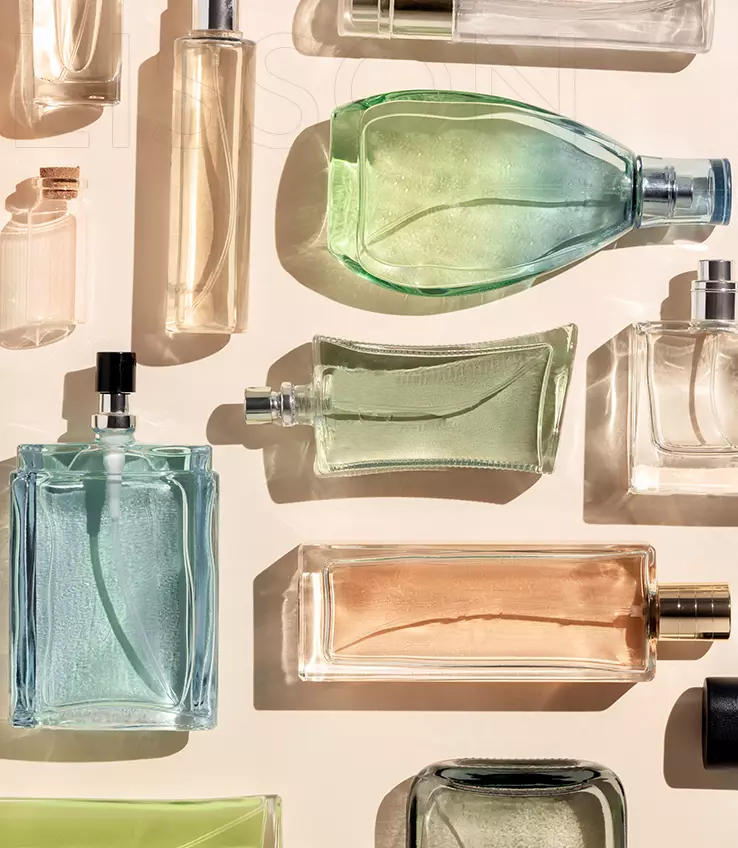




Choosing cosmetic packaging is not just about selecting an attractive bottle. For skincare brands, the consistency of the formula is one of the most important factors when deciding which container and dispensing system to use.
A lightweight facial serum, a daily moisturizing lotion, and a rich night cream may all belong to the same skincare collection, but they do not necessarily need the same packaging. If the bottle opening is too small or the pump is not designed for the formula, consumers may experience slow dispensing, inconsistent product output, or difficulty getting the remaining product out of the container.
So, how can cosmetic brands match packaging with product viscosity? The most practical approach is to evaluate how the formula flows, how consumers will dispense it, and which packaging components will come into contact with the product.
For brands developing premium skincare products, LISSON offers different glass cosmetic bottles, dropper bottles, pump packaging, and matching cosmetic jars to support different product applications.
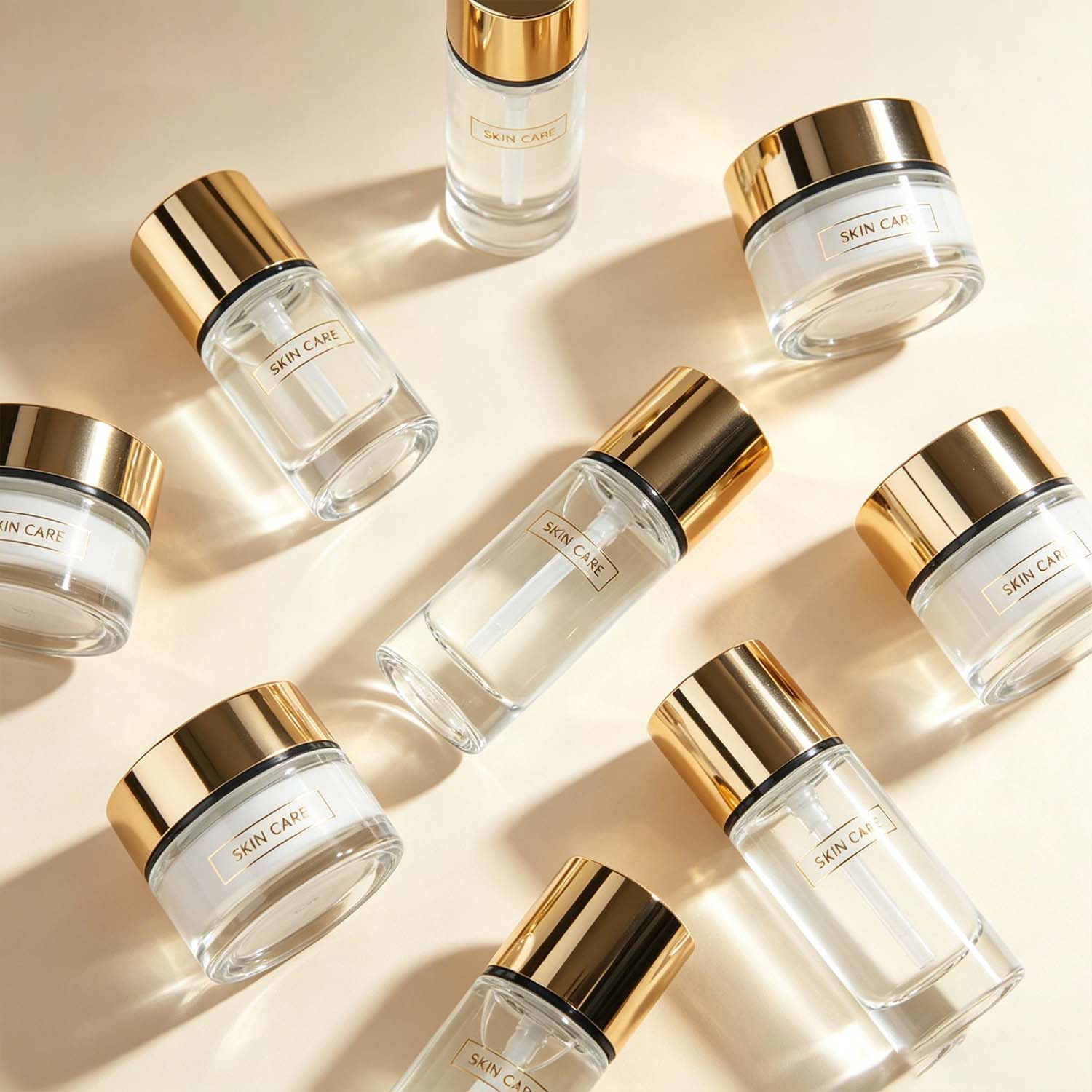
Why Does Product Viscosity Matter When Choosing Cosmetic Packaging?
Viscosity describes how strongly a liquid resists flowing. Water has relatively low viscosity, while thick lotions, creams, and balms have much higher viscosity.
In cosmetic packaging, viscosity influences how easily a formula moves through a bottle opening, dip tube, pump chamber, or dispensing nozzle.
For example, a watery toner can usually flow through a narrow opening without much resistance. A rich moisturizing lotion may require a pump with a suitable intake design and wider internal passages. A thick facial cream may be more convenient to package in a wide-mouth glass jar.
When selecting packaging, cosmetic brands should consider:
- How quickly the formula flows at normal storage and usage temperatures.
- Whether the product contains oils, emulsions, gels, or suspended particles.
- How much product should be dispensed each time.
- Whether the formula needs a dropper, pump, spray, or manual application.
- How much product may remain inside the package after normal use.
It is also important to remember that viscosity can change with temperature and formulation conditions. Therefore, a packaging system should be tested using the actual product rather than selected according to appearance alone.
Choose Glass Dropper Bottles for Lightweight Serums and Facial Oils
Glass dropper bottles are commonly used for liquid skincare products that require controlled dispensing in relatively small quantities.
Typical applications include:
- Facial serums and essence concentrates.
- Facial oils and botanical extracts.
- Essential oil blends.
- Lightweight treatment liquids.
- Selected low-viscosity active skincare formulations.
The main advantage of a dropper is that it allows consumers to collect and dispense a relatively small amount of formula. This is particularly useful for concentrated skincare products where controlled application is part of the user experience.
However, not every serum is suitable for every dropper. A very thin formula may drip too quickly, while a thicker serum may be difficult to draw into a narrow pipette.
Brands should evaluate the pipette diameter, bulb performance, liquid intake, dispensing consistency, and sealing structure before approving the packaging.
LISSON's Glass Dropper Bottle Collection includes different glass designs for serums, essential oils, and liquid skincare applications.
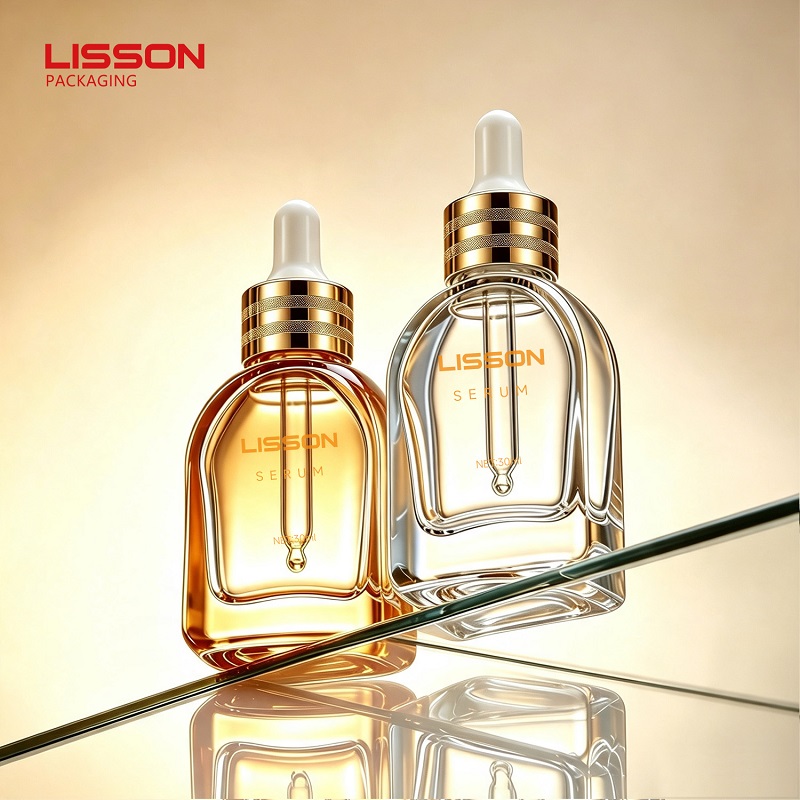
Use Lotion Pump Bottles for Medium-Viscosity Skincare Formulas
Many facial lotions, liquid moisturizers, and lightweight cleansing products are designed to be dispensed through a pump system.
A lotion pump provides convenient dispensing without requiring consumers to remove the entire closure every time they use the product. This can improve the daily application experience, especially for products used regularly.
When matching a lotion formula with a pump bottle, brands should evaluate:
- Formula viscosity under normal operating temperatures.
- Pump output per stroke.
- Dip tube length and internal diameter.
- Priming time before the first product discharge.
- Whether the formula contains ingredients that may affect pump components.
- Product recovery and residue remaining inside the bottle.
A pump that works well with a thin facial lotion may not perform equally well with a thick moisturizer. The formula must move through the pump mechanism consistently without excessive resistance or repeated pressing.
For brands developing coordinated skincare collections, LISSON's Skincare Glass Packaging range offers different bottle and jar formats that can be evaluated according to product viscosity and dispensing requirements.
Choose Wide-Mouth Glass Jars for Thick Creams and Balms
Rich facial creams, overnight masks, body butters, and cleansing balms can be difficult to dispense through conventional narrow bottle openings.
For these products, a wide-mouth glass jar is often a more practical packaging option.
The larger opening allows consumers to access thicker formulations directly using clean fingers or a cosmetic spatula. It also reduces the need to force a highly viscous product through a narrow pump or dispensing tube.
When choosing a cosmetic glass jar, consider:
- Jar opening diameter and product accessibility.
- Available capacity and required fill volume.
- Closure design and sealing performance.
- Inner sealing discs or other protective components where appropriate.
- Whether the formula is sensitive to air exposure or contamination.
- How the product will be removed during the final stage of use.
For premium skincare brands, the jar's weight, shape, glass color, and decorative finish can also contribute to the overall product presentation.
However, a jar does not automatically provide better formula protection than a bottle. Brands should still evaluate the closure, sealing structure, product preservation system, and expected usage conditions.
Understand How Formula Viscosity Affects Pump and Dropper Performance
Two products with the same packaging capacity may behave very differently during dispensing because their formulations have different flow characteristics.
For example, a water-based serum may pass through a dropper easily, while an oil-rich serum with a thicker texture may require a different pipette design.
Similarly, a lotion pump can dispense a lightweight moisturizer smoothly but may struggle when the formula becomes more viscous at lower temperatures.
Common packaging problems include:
| Packaging Problem | Possible Cause | What to Evaluate |
|---|---|---|
| Pump dispenses slowly | Formula is too thick for the pump configuration | Pump passage and intake design |
| Dropper draws too little product | Formula viscosity or pipette design | Pipette diameter and bulb performance |
| Product leaks around closure | Poor fit or sealing incompatibility | Neck finish, gasket, and closure fit |
| Excessive product residue | Container or dispensing system is unsuitable | Bottle geometry and product recovery |
| Inconsistent dispensing | Air intake or pump performance issues | Priming, sealing, and dose consistency |
These problems show why brands should test the complete packaging system rather than selecting a bottle based only on its capacity or appearance.
Consider Formula Sensitivity and Glass Packaging Materials
Viscosity is important, but it is not the only factor that determines suitable cosmetic packaging.
Some skincare formulations contain ingredients that are sensitive to light, oxygen, temperature, or contact with particular packaging materials.
For example, brands developing products with light-sensitive ingredients may consider amber or other appropriately protective glass colors. Clear glass may be preferred when the appearance of the formula is part of the product presentation, provided the formula's light stability has been established.
In addition, the pump, dropper, cap, liner, and sealing components should be evaluated for compatibility with the actual formulation.
Glass is widely used for cosmetic packaging because of its material stability and design versatility. Nevertheless, the complete package should be validated before commercial production.
How Can Cosmetic Brands Select the Right Packaging Format?
A practical way to select packaging is to begin with the formula and then work toward the container and dispensing system.
Use the following comparison as an initial selection guide:
| Product Type | Common Packaging | Main Consideration |
|---|---|---|
| Facial toner | Glass bottle or spray bottle | Flow control and spray compatibility |
| Liquid serum | Glass dropper bottle | Controlled dispensing |
| Facial lotion | Glass lotion pump bottle | Pump output and intake performance |
| Rich face cream | Wide-mouth glass jar | Easy access and closure sealing |
| Cleansing balm | Glass cosmetic jar | Product recovery and material compatibility |
This is a starting point rather than a fixed rule. The actual packaging choice depends on the formulation, usage method, dispensing requirements, and compatibility test results.
Why Work With LISSON for Custom Glass Cosmetic Packaging?
For cosmetic brands, selecting packaging is a combination of product engineering, consumer experience, and brand presentation.
LISSON provides glass cosmetic packaging options for skincare products, including dropper bottles, lotion bottles, and cosmetic jars. Brands can evaluate different bottle shapes, capacities, closures, and decorative finishes according to their product requirements.
Whether you are developing a lightweight facial serum, a daily moisturizer, or a rich skincare cream, it is important to share the formula characteristics and intended dispensing method before confirming the packaging design.
By considering viscosity, closure compatibility, and actual product performance together, brands can reduce packaging problems and create a more consistent customer experience.
Explore LISSON glass cosmetic packaging products to find packaging options for your next skincare project.
Frequently Asked Questions About Cosmetic Packaging and Viscosity
How does viscosity affect cosmetic bottle selection?
Viscosity affects how easily a formula flows through the bottle opening, pump, or dropper. Low-viscosity products commonly use bottles with droppers or sprayers, while thicker lotions may require suitable lotion pumps and rich creams are often packaged in wide-mouth jars.
Are glass dropper bottles suitable for all facial serums?
No. Dropper bottles are suitable for many liquid serums, but very thick formulations may not draw smoothly into the pipette. The formula and dropper assembly should be tested together.
Can a thick facial lotion use a glass pump bottle?
Yes, provided the pump is designed to handle the formula's viscosity. Pump intake, internal passage dimensions, dispensing output, and performance at different temperatures should be evaluated.
Should thick face creams be packaged in glass jars?
Glass jars are often practical for thick creams and balms because their wide openings allow easy product access. Closure sealing and hygiene requirements should also be considered.
Does temperature affect cosmetic packaging performance?
Yes. Temperature can change formula viscosity and influence pump or dropper performance. Testing under relevant storage and usage conditions helps confirm that the packaging remains functional.
What information should brands provide when selecting cosmetic glass packaging?
Brands should provide the formula type, viscosity or flow characteristics, packaging capacity, dispensing preference, storage conditions, and any special material or decoration requirements.