What Types of Glass Packaging Are Commonly Used for Cosmetics?
Sep 15, 2026
When you look at cosmetic packaging on a retail shelf, the first thing you may notice is the shape, color, or finish. But for a beauty brand, the choice of glass packaging involves much more than appearance. The bottle or jar needs to work with the formula, provide a practical dispensing experience, protect the product during storage, and fit the overall positioning of the brand.
So, what types of glass packaging are commonly used for cosmetics?
The most common options include glass skincare bottles, dropper bottles, pump bottles, cream jars, perfume bottles, and coordinated bottle-and-jar sets. Each format serves a slightly different purpose. A lightweight serum may work well with a dropper bottle, while a rich face cream is often better suited to a wide-mouth glass jar. Perfume, meanwhile, usually requires a bottle designed around both fragrance dispensing and visual presentation.
For brands developing a new cosmetic line, the better approach is not simply to choose the most attractive bottle. It is to start with the product itself and then match the packaging format, capacity, closure, material, and decoration to that product.
Glass Skincare Bottles for Everyday Cosmetic Products
Glass skincare bottles are one of the most widely used forms of cosmetic glass packaging. They are suitable for many liquid and semi-liquid skincare products, including lotions, essences, toners, facial treatments, and lightweight moisturizers.
The main advantage of a bottle is controlled dispensing. Depending on the formula, the bottle can be paired with a lotion pump, treatment pump, spray pump, or another dispensing system. This makes the packaging easier to use for products that need to be dispensed in relatively consistent amounts.
For example, a facial lotion may be easier to use with a pump than with a screw cap. The consumer can dispense the product directly into the hand without opening the container every time. This can also support a cleaner daily-use experience.
For brands looking for different shapes, capacities, and finishes, Lisson's skin care glass bottle collection provides a useful starting point for comparing different cosmetic bottle formats.
Glass skincare bottles can also be customized to create a more distinctive visual identity. Clear glass gives a clean and transparent appearance, while frosted finishes, colored coatings, metallic components, and custom printing can create a more premium look.
Why Are Glass Dropper Bottles Commonly Used for Serums?
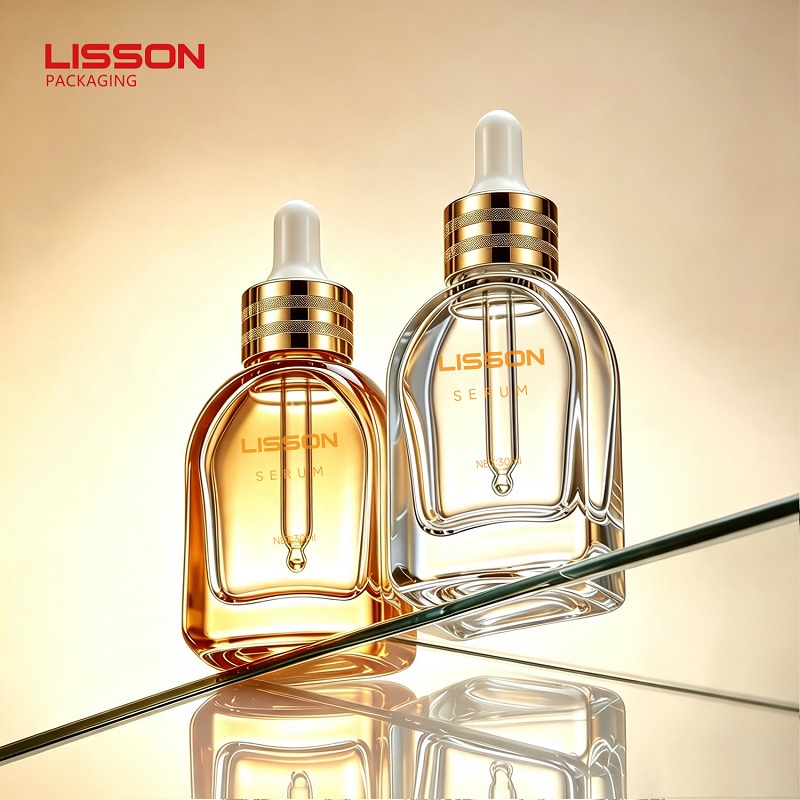
Dropper bottles are especially common in skincare because they provide a simple way to dispense small quantities of liquid. They are frequently used for facial serums, facial oils, botanical extracts, essential oils, and other concentrated liquid treatments.
The dropper format is particularly useful when the consumer does not need a large amount of product at one time. Instead of pouring the formula directly from the bottle, the pipette can collect a controlled amount and release it onto the hand or directly onto the skin.
Packaging design also plays an important role here. A serum bottle may only contain 15ml, 30ml, or 40ml, but the bottle still needs to communicate the value of the formula. A heavier glass base, carefully designed shoulder, metallic collar, or custom color can make a relatively small package feel substantial.
Lisson's glass dropper bottle range includes different shapes and designs intended for serums, essential oils, and other liquid cosmetic formulations.
One example is a 30ml glass dropper bottle. This size is practical for concentrated facial treatments and can also give a premium skincare line a compact, high-value appearance. For brands developing a serum collection, it is useful to compare not only the bottle shape but also the pipette design, cap material, neck size, and overall dispensing performance.
A good dropper package should feel comfortable in the hand, provide a reliable seal, and dispense the formula without unnecessary dripping or mess. These details can have a surprisingly large effect on the everyday user experience.
Glass Pump Bottles for Lotions and Liquid Treatments
Pump bottles are another common choice for cosmetic packaging. They are particularly useful when a formula has a medium or relatively fluid consistency and the consumer expects quick, convenient dispensing.
Typical applications include facial lotions, moisturizers, liquid cleansers, body lotions, treatment essences, and some liquid makeup products.
The main reason brands choose a pump is convenience. The consumer can press the actuator with one hand and dispense the product without removing a cap. For products used every morning and evening, that small improvement in convenience can make the packaging feel much more practical.
When selecting a pump bottle, however, the bottle should not be considered separately from the pump. The viscosity of the formula, dip tube length, pump output, closure dimensions, and compatibility between the formula and packaging components all need to be considered during development.
For premium skincare, a simple glass bottle can also be upgraded through decoration. Frosted glass, gradient coating, silk screen printing, hot stamping, metallic components, and customized caps can all be used to create a more recognizable package.
When Should You Choose a Glass Cream Jar?
Not every cosmetic formula is suitable for a narrow-neck bottle. Rich creams, face masks, cleansing balms, body butters, and some intensive treatments are often easier to use in a wide-mouth jar.
A glass cream jar allows the consumer to access the formula directly. This makes it particularly suitable for products that are too thick to move efficiently through a conventional pump.
Jar packaging also has a strong connection with premium skincare. The weight of the glass, the wide opening, and the substantial lid can create a more luxurious experience compared with lightweight packaging.
For example, a 50g cream jar can be used for night creams, eye creams, moisturizing creams, or other concentrated treatments. The exact capacity should depend on the dosage, positioning, and intended usage period of the product.
Brands looking for a more substantial cream package can consider Lisson's luxury square glass cream jar, which combines a wide-body jar format with a more structured appearance.
For jar packaging, the closure deserves particular attention. A secure lid and suitable inner sealing structure can help reduce leakage and unnecessary exposure after the product has been opened. For formulas that are sensitive to contamination or oxidation, brands should also consider how consumers will access the product during everyday use.
Glass Perfume Bottles for Fragrance Brands
Perfume bottles are different from many skincare containers because packaging is often a major part of the fragrance's identity. The bottle does not simply hold the fragrance. It helps communicate the personality and positioning of the brand.
Common perfume bottle designs include square bottles, rectangular bottles, rounded bottles, faceted bottles, sculptural shapes, and custom silhouettes. Clear glass can emphasize the color of the fragrance, while colored or coated glass can create a stronger visual identity.
The closure and spray system are equally important. A perfume bottle needs a reliable atomizer that delivers a fine and consistent spray. The cap and collar also need to fit the overall design rather than feeling like separate components.
Lisson offers a dedicated perfume glass bottle collection covering different shapes and decorative approaches for fragrance brands, private label manufacturers, and cosmetic packaging buyers.
For a premium perfume line, details such as glass thickness, base weight, cap design, surface decoration, color, and logo application can all contribute to the final impression. A simple bottle with the right proportions can sometimes look more premium than a heavily decorated design.
Matching Glass Bottle and Jar Sets for Skincare Lines
When a brand launches several products at the same time, using completely different packaging can make the product line look disconnected. A bottle-and-jar set solves this problem by creating a consistent visual language across different product formats.
A typical skincare set might include a toner or essence bottle, a serum bottle, a lotion bottle, and a matching cream jar. The individual packages can have different functions while sharing the same glass shape, surface finish, cap style, or decorative details.
This approach is especially useful for brands that want customers to recognize the entire skincare range as one collection.
For example, a serum may use a dropper, while a lotion uses a pump and a cream uses a screw-top jar. They do not need to be identical. What matters is that the design elements work together.
Lisson's cosmetic glass bottle sets are designed around this type of coordinated packaging approach.
A complete set can also simplify product development. Instead of sourcing every package from a different supplier, a brand can work toward a more unified packaging system and coordinate decoration, accessories, colors, and production requirements.
How Do Clear, Frosted, Amber, and Colored Glass Differ?
The shape of the container is only one part of cosmetic packaging. Glass color and surface treatment can also influence both product presentation and functional performance.
Clear glass is a common choice when brands want consumers to see the formula. It works particularly well when the product itself has an attractive color or when transparency is part of the brand identity.
Frosted glass creates a softer visual effect. It is frequently associated with premium skincare, minimalist beauty products, and modern cosmetic lines. Frosting can also change how light interacts with the surface, giving a simple bottle a more refined appearance.
Amber glass can be useful when light sensitivity is an important consideration. Certain formulas and ingredients can be affected by light exposure, so the packaging color should be evaluated together with the formulation and storage conditions.
Colored or coated glass gives brands more freedom in visual branding. Gradient finishes, custom colors, metallic effects, and other surface treatments can turn a standard container into a recognizable brand asset.
The right choice depends on the formula first and the visual direction second. Packaging should look attractive, but it also needs to perform its intended function.
How Does the Cosmetic Formula Affect the Choice of Glass Packaging?
A useful way to choose cosmetic packaging is to start with four questions: What is the formula's consistency? How much product will the consumer use at one time? Is the formula sensitive to light or air? And how should the product be dispensed?
For watery products such as toners and facial mists, a bottle with a suitable spray or dispensing system may be more practical.
For concentrated serums and facial oils, a dropper bottle can provide a more controlled dispensing experience.
For lotions and fluid moisturizers, a pump bottle is often more convenient than a wide-mouth jar.
For thick creams, balms, and masks, a wide-mouth glass jar may provide easier product access.
For fragrance, the bottle and atomizer need to work together while also supporting the visual identity of the perfume.
This formula-first approach helps avoid a common packaging mistake: choosing a bottle because it looks good and trying to make the formula fit it afterward.
What Should Brands Consider When Customizing Glass Cosmetic Packaging?
Custom packaging is not limited to changing the bottle shape. A complete cosmetic packaging project can involve capacity, glass color, surface finish, decoration, closure, pump, dropper, cap, printing, and packaging assembly.
Before requesting a quotation, it helps to prepare several basic details:
Product type and formula viscosity
Target packaging capacity
Preferred bottle or jar shape
Dispensing method
Glass color or finish
Logo and decoration requirements
Target market and product positioning
Expected order quantity
Having this information ready can make communication with a glass packaging manufacturer much more efficient. It also allows the supplier to recommend a more suitable existing mold or discuss whether a custom mold is necessary.
For brands that need a combination of standard packaging and customized decoration, Lisson provides custom glass packaging and OEM/ODM services covering design, decoration, and packaging development.
Why Does Glass Remain Popular for Premium Cosmetics?
Glass continues to be popular in beauty packaging because it combines several qualities that are difficult to achieve with a single alternative material.
It has a substantial feel in the hand, offers a wide range of shapes and finishes, and can be decorated in many different ways. For premium skincare and fragrance products, this physical experience can become part of the product itself.
Glass also gives brands considerable flexibility during product development. A single packaging concept can be adapted into different capacities or coordinated with matching bottles and jars to create an entire product family.
From a branding perspective, this matters because consumers often see packaging before they experience the formula. The weight of the bottle, the surface finish, the cap, the color, and even the way the product sits on a bathroom shelf all contribute to the perception of the brand.
Frequently Asked Questions About Cosmetic Glass Packaging
What is the most common type of glass packaging for skincare?
Glass bottles are widely used for liquid skincare products such as toners, essences, lotions, and serums. Dropper bottles are particularly common for concentrated serums and facial oils, while jars are often selected for thicker creams and balms.
Are glass dropper bottles suitable for facial serums?
Yes. Dropper bottles are commonly used for liquid serums because the pipette allows the consumer to dispense a relatively small and controlled amount of formula. The exact dropper design should still be tested with the specific formulation.
Should I use a glass bottle or jar for face cream?
It depends on the viscosity and dispensing requirements of the cream. Lightweight lotions may work well in pump bottles, while thick creams and balms are often easier to access from a wide-mouth glass jar.
What type of glass packaging is suitable for perfume?
Perfume is commonly packaged in glass bottles with fine-mist spray systems. The bottle shape, glass thickness, color, cap, collar, and decoration can all be customized according to the fragrance brand's positioning.
Can cosmetic glass bottles be customized with a logo?
Yes. Depending on the bottle and production requirements, cosmetic glass packaging can be customized through printing, coating, frosting, metallic decoration, color treatment, and other surface-decoration processes.
Can a brand order matching cosmetic bottles and jars?
Yes. Matching bottle-and-jar packaging is useful for skincare collections that include several products. The bottles and jars can share colors, finishes, caps, decoration, and design elements while using different dispensing systems for different formulas.
What information should I provide when requesting custom glass packaging?
At minimum, provide the product type, formula viscosity, required capacity, preferred package format, dispensing method, target quantity, decoration requirements, and any existing design references. This gives the manufacturer a clearer understanding of the project.
Choosing the Right Glass Packaging for Your Cosmetic Product
There is no single glass container that works for every cosmetic product. A serum, lotion, cream, perfume, and facial oil all have different packaging requirements.
The most practical way to choose is to start with the formula and user experience. Consider how the product flows, how much should be dispensed, how often the package will be opened, whether the formula needs additional light protection, and what kind of visual impression the brand wants to create.
From there, the bottle or jar format becomes much easier to define.
For a skincare line, that may mean combining a pump bottle for lotion, a dropper bottle for serum, and a glass jar for cream. For a fragrance brand, the priority may shift toward a distinctive perfume bottle with a reliable fine-mist sprayer and carefully developed decoration.
The strongest cosmetic packaging is usually the one where appearance and function are developed together. It should protect the formula, make the product easy to use, and communicate the brand clearly without making the design unnecessarily complicated.
For brands exploring different cosmetic glass packaging formats, Lisson provides glass bottles, dropper bottles, perfume bottles, jars, coordinated packaging sets, and customized OEM/ODM solutions. Comparing the packaging format against the formula and intended market before moving into mass production can help create a package that works both on the shelf and in everyday use.