Leakage between a cosmetic bottle and its closure can cause more than a messy package. For skincare brands, cosmetic packaging distributors, and private-label manufacturers, even a small leak may lead to damaged labels, wasted product, customer complaints, and rejected shipments. The problem can occur with lotion bottles, serum bottles, dropper bottles, and perfume packaging.
The most common causes of leakage between a cosmetic bottle and its closure are an incompatible bottle neck and cap, a damaged or missing sealing component, incorrect closure assembly, formula incompatibility, and pressure or temperature changes during storage and shipping. To identify the cause, inspect the bottle and closure together, locate where the liquid escapes, and test the assembled package under conditions that reflect its intended use.
For brands developing skincare packaging, LISSON offers glass lotion bottles in different styles and packaging configurations. Selecting a compatible bottle and closure from the beginning can help reduce leakage risks before mass production.
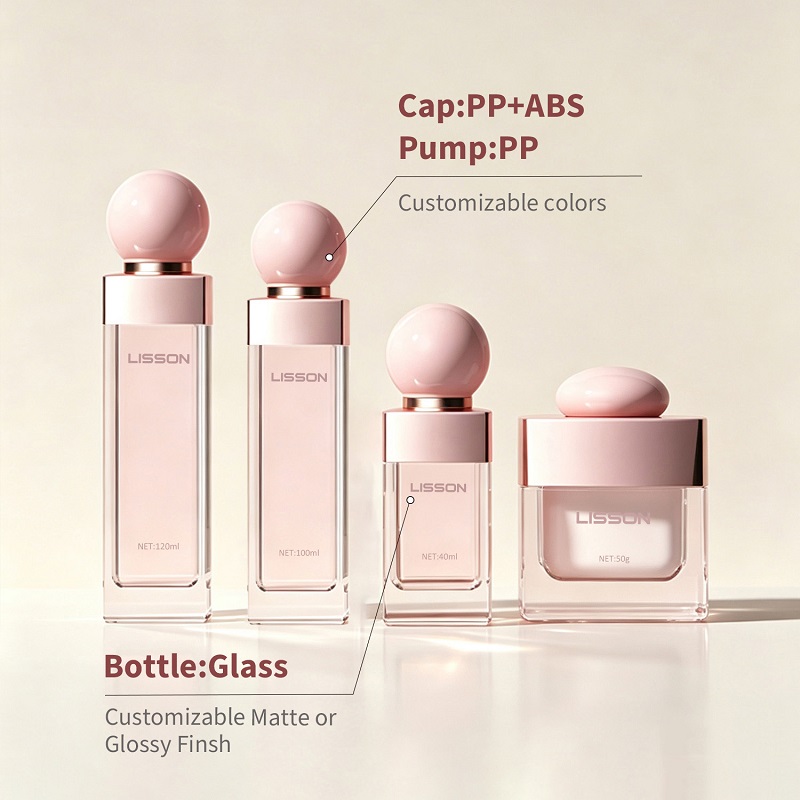
Leakage usually occurs when the closure cannot create or maintain a reliable seal with the bottle, or when another part of the packaging system allows the formula to escape. The exact cause depends on where the liquid appears and when the leak starts.
The main causes include:
These causes can produce similar symptoms, so replacing the cap or pump immediately may not solve the problem. First, determine whether the liquid is escaping around the bottle neck, through the dispensing mechanism, or from a damaged part of the package.
Yes. An incompatible bottle neck finish is one of the first things to check when liquid appears around the connection between the bottle and its closure.
The bottle neck and closure must match in their relevant dimensions and connection design. For a threaded cap or lotion pump, the thread profile, diameter, engagement, and sealing surface all affect how the components fit together. A closure that can be screwed onto a bottle is not necessarily a closure that seals it properly.
Common warning signs include:
For example, a glass skincare bottle may look correct and have the desired capacity, but an incompatible pump collar or neck specification can still create a leak path. This is why bottle and closure dimensions should be confirmed together rather than selected independently based on appearance.
For a coordinated packaging design, luxury square glass cosmetic bottles with matching caps offer an option for skincare products such as lotions and serums. The exact closure specification and fit should still be confirmed for the selected configuration.
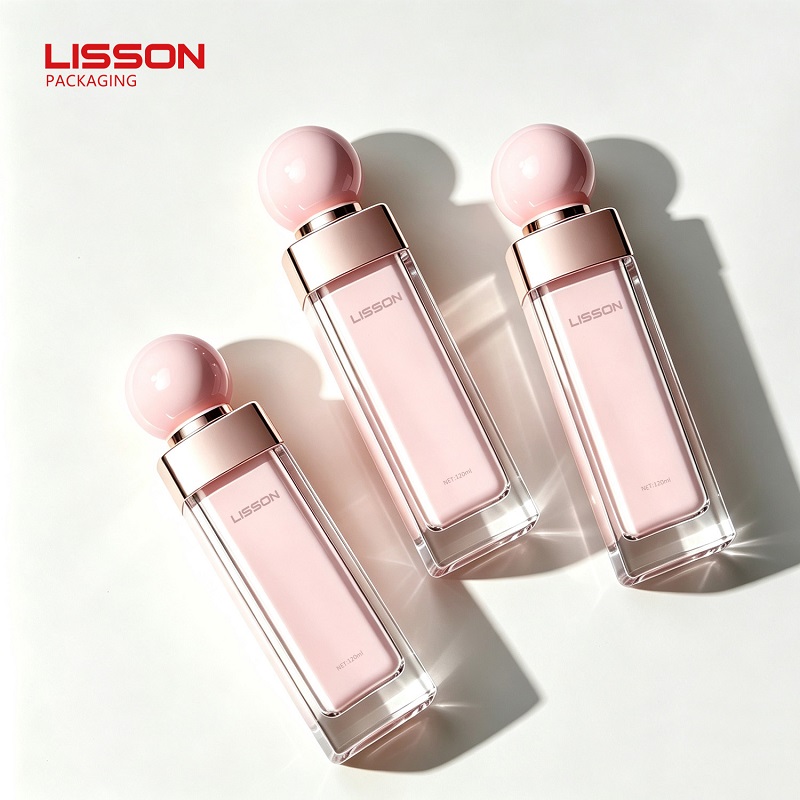
Even when the bottle neck and closure are compatible, the assembled package may leak if the sealing components are damaged or the closure is not installed correctly.
Depending on the design, sealing may rely on direct contact between surfaces or on components such as liners, gaskets, plugs, or internal seals. If a required component is missing, displaced, deformed, contaminated, or damaged, the closure may not provide the intended seal.
Assembly problems can also affect performance. A screw cap that is cross-threaded may appear closed without sitting correctly. A pump collar that is not secured as specified may leave a weak connection. Excessive tightening can also damage some components, so applying more force is not always the right solution.
During inspection, check whether:
If leakage occurs across multiple samples from the same production batch, review the component specifications and assembly process rather than treating each leaking unit as an isolated problem.
Yes. A packaging system that performs well with one formula may behave differently with another. Cosmetic formulations vary in viscosity, chemical composition, oils, alcohol content, surfactants, and other ingredients. These differences can influence dispensing behavior and compatibility with certain closure materials.
Potential problems include swelling or deformation of a sealing component, changes in the fit between parts, residue buildup, or deterioration of a material that contacts the formula. The actual risk depends on the formulation and the materials used in the complete package.
Glass is commonly selected for cosmetic packaging because of its chemical stability, but the glass bottle is only one part of the system. The cap, pump, liner, gasket, coating, and other product-contact components may need separate compatibility evaluation.
To reduce this risk, brands should:
Water can help reveal obvious leaks during preliminary checks, but it does not fully represent every lotion, serum, oil-based formula, or alcohol-containing product. Testing should reflect the intended application and use conditions.
A cosmetic bottle may pass an initial inspection and still leak during transportation. Shipping exposes packaging to handling, vibration, impact, changes in temperature, and sometimes pressure changes. These conditions may reveal a weak seal or an assembly problem that was not obvious during a simple upright storage check.
Leakage during shipping does not automatically mean that pressure is the only cause. A loose closure, damaged neck, incompatible seal, or pump that was not secured correctly may also contribute.
For products intended for international shipping or e-commerce delivery, brands should consider the complete filled package, not just the empty bottle. Depending on the product and distribution route, relevant checks may include:
Secondary packaging and protective caps can help reduce handling damage, but they cannot compensate for a primary closure that does not seal correctly. The bottle, closure, formula, and shipping conditions should be evaluated as one packaging system.
The fastest way to investigate leakage is to record where the liquid appears, when the problem occurs, and whether it affects one sample or multiple units. These observations help narrow down the possible cause before components are replaced.
| Observed symptom | Possible cause | What to check |
|---|---|---|
| Liquid around the bottle neck | Poor seal, incompatible neck finish, or incorrect assembly | Thread dimensions, closure alignment, gasket, liner, and assembly process |
| Liquid leaking from a pump or spray head | Damaged internal component, valve issue, or residue | Pump operation, nozzle, internal seals, and formula compatibility |
| Leakage appears after transport | Closure movement, impact, vibration, or environmental changes | Closure security and post-transport package condition |
| Leakage develops after storage | Material compatibility, seal deterioration, or gradual loss of sealing performance | Formula interaction, storage conditions, and sealing components |
| Only certain units leak | Variation in components, assembly, or localized damage | Sample differences, dimensional records, and production inspection results |
This table is a starting point for troubleshooting, not a substitute for testing. If the leak source is unclear, inspect the complete package and use an appropriate leakage test method to confirm the suspected cause.
Before approving cosmetic packaging for mass production, brands should confirm that the bottle and closure work together with the intended formula and filling process. Visual inspection alone cannot demonstrate that the package will remain leak-resistant during storage and distribution.
A practical pre-production evaluation may include the following checks:
The test method, sample quantity, duration, orientation, and pass/fail criteria should be agreed upon for the specific project. There is no single test that automatically proves every cosmetic package will remain leak-free under all conditions.
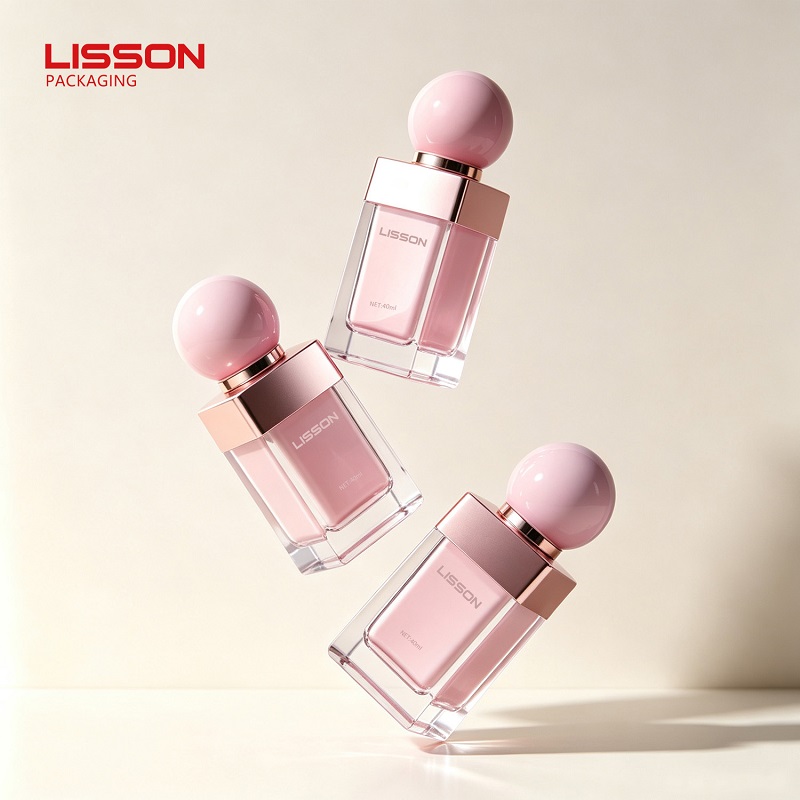
For brands developing a new bottle shape, closure combination, or decorative finish, LISSON's custom glass packaging service can be a starting point for discussing bottle design, neck finish, pumps, caps, and other packaging requirements. Confirm the exact components and validation plan before approving bulk production.
Why does my cosmetic bottle leak around the cap?
Leakage around the cap may result from an incompatible bottle neck and closure, a damaged or missing sealing component, incorrect assembly, or damage to the bottle finish. Inspect the connection and confirm that the closure matches the bottle specification.
Can a cap fit a cosmetic bottle and still leak?
Yes. A cap may appear to fit but still fail to seal if the thread engagement, sealing surface, liner, or closure dimensions are unsuitable. A proper fit inspection and leakage test are needed to evaluate the assembled package.
Can cosmetic ingredients cause a bottle closure to leak?
Yes. Some ingredients may affect certain closure materials, liners, or seals over time. Test the intended formula with the actual packaging components whenever practical, and inspect for changes during the evaluation period.
Why do cosmetic bottles leak during shipping?
Shipping can expose weaknesses caused by poor sealing, loose closures, damaged components, vibration, impact, or temperature and pressure changes. Evaluate the filled and closed package under conditions relevant to its distribution route.
How can I test whether a cosmetic bottle closure is leak-proof?
Use a suitable leakage test method with defined conditions and acceptance criteria. Depending on the package, testing may include upright or other relevant orientations, pressure or vacuum methods, storage evaluation, and transport simulation. Confirm that the method is appropriate for the specific bottle and closure design.
Should I replace the bottle or only the cap if leakage occurs?
It depends on the failure point. If the closure or its sealing component is defective, replacing that component may resolve the issue. If the bottle neck is damaged or incompatible with the closure, the bottle or complete packaging configuration may need to be changed. Identify the cause before deciding.
What should brands check before ordering cosmetic bottles in bulk?
Confirm the bottle dimensions, neck finish, closure compatibility, formula compatibility, assembly requirements, leakage test results, and relevant storage and transport performance. Approve production-representative samples before mass production.
Can LISSON help with compatible glass cosmetic bottles and closures?
LISSON offers glass cosmetic packaging options and customization services covering bottle design and closure components. Brands should provide their formula requirements, desired bottle specifications, and intended application so the appropriate configuration and validation requirements can be discussed.
Leakage between a cosmetic bottle and its closure is often a packaging-system problem rather than a defect in the glass bottle alone. An incompatible neck finish, damaged seal, incorrect assembly, formula interaction, or shipping conditions can all contribute to the same visible symptom.
The most reliable approach is to confirm the bottle and closure specifications together, test the assembled package with the intended formula, and evaluate performance under realistic storage and transport conditions before mass production. This helps brands identify potential problems earlier and make better-informed packaging decisions.
For skincare and beauty brands planning new packaging, LISSON's glass cosmetic bottle options and customization services provide a starting point for discussing bottle design, closure selection, and packaging requirements.
WhatsApp : +86 15099958531
Email : lissontube@gzlisson.com
Phone : +0086 15099958531