When you explore custom cosmetic glass bottles for your brand, you face mold design and tooling costs that can range widely. The average cost for sample or test molds starts at $1,500 and can reach $3,500, while multi-cavity molds for larger runs often range from $10,000 to $25,000 or more.
|
Mold Type |
Cost Range |
|---|---|
|
Sample/Test Molds |
$1,500 - $3,500 |
|
Multi-Cavity Molds |
$10,000 - $25,000+ |
Understanding these costs proves vital for cosmetics decision-makers. High-quality tooling reduces waste and downtime, protecting your margins across the product lifecycle. The right choices in bottles and cosmetic packaging also help you scale production and maintain brand reputation.
Investing in the right mold design supports your profitability and strengthens your packaging strategy for both today and the future.
Understand mold costs. Sample molds start at $1,500, while multi-cavity molds can exceed $25,000. Budget accordingly to avoid surprises.
Collaborate early with your supplier. This ensures your packaging meets both creative and technical goals, leading to better outcomes.
Choose the right materials. The type of glass affects both cost and product quality. Select materials that align with your brand's needs.
Plan for production volume. Larger orders reduce per-unit costs, making it more economical to scale your cosmetic line.
Consider decoration techniques carefully. Some methods are more cost-effective at lower volumes, impacting your overall budget.
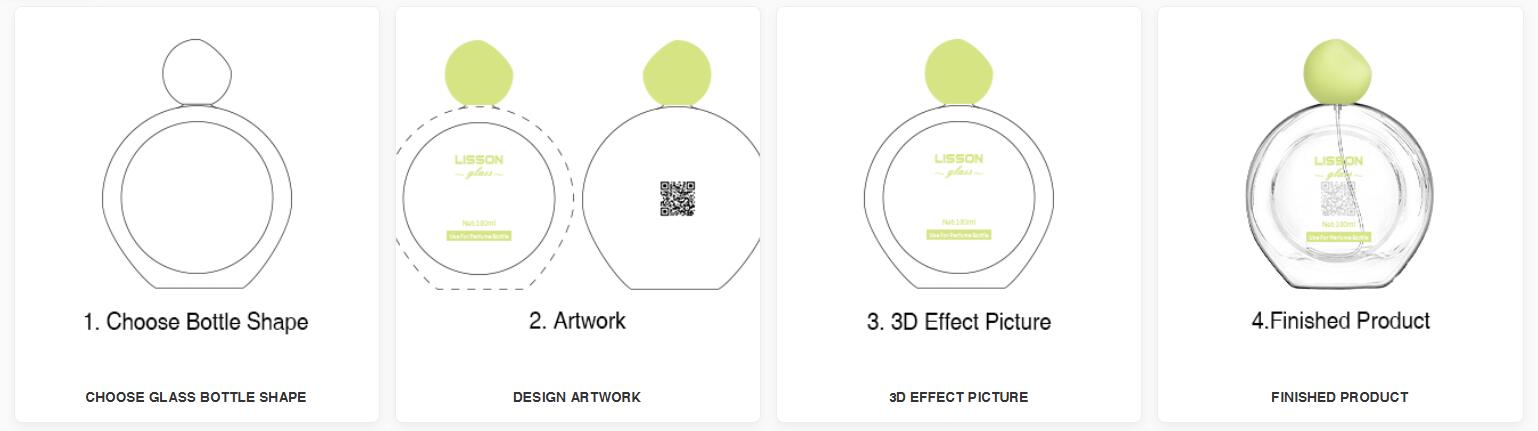
When you start the journey of creating custom cosmetic glass bottles, you follow a series of precise steps. As a brand, you want your packaging to stand out on the shelf and reflect your unique identity. Lisson, a leading custom glass bottle manufacturer, guides you through each stage with advanced technology and industry expertise.
3D Concept Translation
You begin by turning your sketches or ideas into digital models using CAD software. This step lets you visualize the final product and test its ergonomics and durability.
Design for Manufacturing Analysis
Engineers at Lisson evaluate wall thickness, stress points, and molding feasibility. They suggest optimizations to ensure your bottles look beautiful and perform well during production.
Prototyping Pathways
You can choose from several prototyping options. Lisson offers 3D printed resin models with a 72-hour turnaround and high accuracy. For more robust samples, CNC-machined aluminum prototypes arrive in about two weeks. If you want to see your design in real glass, limited sample runs use temporary tooling.
Mold Material Selection
You select materials for your molds, such as cast iron for durability or alloy steels for intricate details. This decision impacts both the cost and the quality of your custom glass packaging.
Venting & Cooling Architecture
Lisson’s engineers design hidden features in the molds that control cooling and venting. These features help reduce defects and speed up production.
Future-Proofing
You plan for future changes by designing molds that allow for adjustments without full retooling. This approach saves you time and money if you want to update your bottles later.
Tip: Early collaboration with your supplier ensures your cosmetic packaging meets both creative and technical goals.
You work with several key stakeholders during the mold design process for custom cosmetic glass bottles. Each group plays a vital role in turning your vision into reality.
Brand Decision-Makers
You set the creative direction and approve final designs. Your choices shape the look and feel of your bottles.
Lisson’s R&D and Engineering Teams
These experts translate your ideas into manufacturable products. They use advanced tools and years of experience to solve technical challenges.
Quality Control Specialists
Lisson’s quality team monitors every step, using 24-hour systems to ensure each bottle meets premium standards.
Sustainability Advisors
If you want eco-friendly options, Lisson’s advisors help you choose recyclable glass and PCR materials for your custom glass bottles.
Production Managers
These professionals oversee the mold-making and glass bottle production, ensuring timelines and costs stay on track.
Note: Open communication with all stakeholders leads to better packaging decisions and a smoother project.
You need to plan your launch carefully, so understanding the timeline for custom cosmetic glass bottles is essential. Lisson’s rapid customization process helps you move from concept to finished product faster than many competitors.
|
Mold Type |
Investment Range |
Ideal Production Volume |
Lead Time |
Key Advantage |
|---|---|---|---|---|
|
Modular/Unit Molds |
$8,000 – $15,000 |
50,000 – 200,000 units |
4-6 weeks |
Cost-effective for medium batches |
|
Dedicated Production Molds |
$25,000 – $50,000 |
200,000 – 1M+ units |
8-12 weeks |
Superior surface finish, faster cycle times |
|
Multi-Cavity Systems |
$40,000 – $80,000 |
500,000+ units |
10-14 weeks |
Reduced per-unit cost at scale |
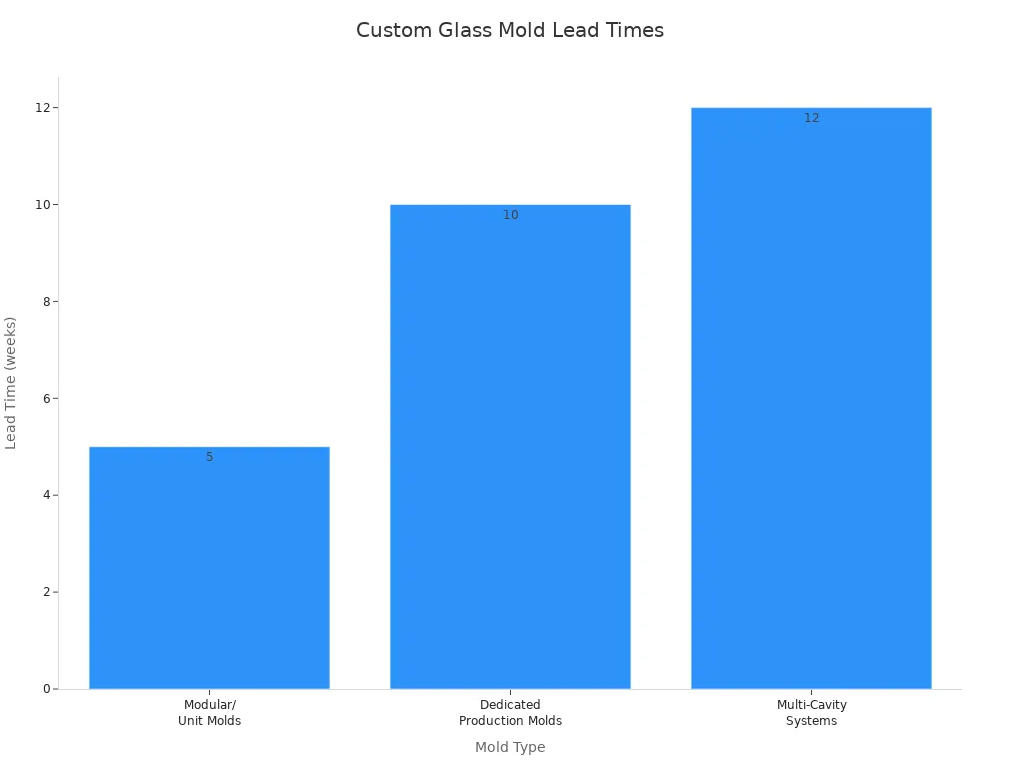
You can expect 3D printed prototypes in as little as 72 hours, with CNC-machined samples ready in two weeks. For brands with urgent needs, Lisson’s ODM library of over 30,000 proven molds allows for sample delivery in just 5–10 days. Full mold development for custom cosmetic glass bottles usually takes 60–90 days, depending on complexity and production volume.
Planning ahead with your supplier helps you manage costs and meet your launch deadlines for fragrance or cosmetic products.
By following these steps and working closely with Lisson, you ensure your custom glass packaging project runs smoothly, stays within budget, and delivers premium results.
When you plan a new line of custom cosmetic glass bottles, you need to understand the main factors that influence tooling cost. Each decision you make—about design, materials, and production—affects your budget and your brand’s ability to scale. Let’s break down the key elements that shape the cost of molds and glass packaging.
You will see the biggest upfront expense in the initial mold cost. This investment covers the design and creation of the molds that shape your bottles. Most suppliers, including Lisson, set the average initial mold cost for custom cosmetic glass bottles between $1,000 and $10,000 or more. The price depends on the complexity of your design and the number of cavities in the mold.
Simple sample or test molds start at $1,500.
Multi-cavity molds for larger runs can reach $25,000 or higher.
Lisson’s average mold cost begins at $7,000 for standard projects.
You can save up to 30-40% on tooling cost by using existing mold bases or adapting proven designs from a supplier’s library. This strategy helps you launch new cosmetic packaging quickly and reduces your financial risk.
Tip: Ask your supplier if you can reuse mold bases or select from their existing catalog to cut costs without sacrificing quality.
The level of customization you choose for your glass bottles directly impacts the cost of your molds. Unique shapes, intricate logos, and special features like dual-roller applicators or vibration tips require advanced engineering and longer development times.
Simple cylindrical bottles cost less to tool than sculpted or asymmetrical designs.
Adding embossing, debossing, or custom textures increases mold complexity and price.
Customization for fragrance or skincare lines often involves multiple mold parts and higher precision.
If you want a premium look for your cosmetic packaging, you may need to invest in custom molds that support advanced decoration or unique dispensing systems. These choices help your brand stand out but require a higher initial investment.
The material you select for your glass packaging influences both the mold design and the overall cost. Different types of glass and finishes require specific molds and processing steps.
Amber glass protects light-sensitive formulas but needs specialized molds, raising tooling costs.
Clear glass highlights product color and may require more precise molds for clarity.
Frosted glass gives a premium skincare look and involves extra processing, which adds to the cost.
Coated glass supports brand-specific colors but can increase rejection rates and lead times.
You should match the material to your product’s needs. For example, a luxury serum bottle will use different materials and molds than a basic shampoo bottle. Your choices affect not only the cost but also the performance and appearance of your custom glass packaging.
Production volume plays a major role in determining the per-unit cost of your glass bottles. Fixed costs like mold setup, machine calibration, and material sourcing stay the same, no matter how many units you produce. When you order larger quantities, you spread these costs over more bottles, which lowers the price per unit.
|
Brand Type |
Quantity |
Unit Cost |
Total Cost |
|---|---|---|---|
|
Startup |
1,000 pcs |
$3.00 |
$3,000 |
|
Established |
10,000 pcs |
$1.50 |
$15,000 |
Minimum order quantities (MOQ) ensure production remains cost-effective.
Small runs have higher per-unit costs because fixed expenses are divided among fewer bottles.
Large orders benefit from economies of scale, making custom cosmetic glass bottles more affordable for established brands.
If you plan to scale your cosmetics line, consider higher volumes to maximize your investment in molds and reduce your overall cost.
Where you source your molds and glass packaging can also affect your costs and project timeline. Different regions offer varying price ranges, service levels, and communication standards.
|
Cost Factor |
Range (USD) |
|---|---|
|
Mold Development Fees |
$1,500 - $8,000 |
|
Sample Rounds Cost |
$200 - $400 each |
|
Service Premium |
10% |
|
Production Delay Savings |
2 months |
|
Miscommunication Rounds |
3 |
You may find lower mold development fees in Asia, while European or North American suppliers often charge a service premium. Working with an experienced custom glass bottle manufacturer like Lisson in Guangzhou can help you balance cost, quality, and speed. Global suppliers with integrated teams reduce miscommunication and keep your project on track.
Note: Always factor in regional service premiums, shipping times, and communication efficiency when making packaging decisions for your brand.
By understanding these tooling cost factors, you can make informed choices for your custom cosmetic glass bottles. You will optimize your budget, achieve your desired look, and ensure your cosmetic packaging supports your brand’s growth.
You need to compare the cost of stock and custom cosmetic glass bottles before making a decision. Stock containers usually cost less per unit, making them a good choice for early-stage brands or limited runs. Custom cosmetic glass bottles require a higher investment but offer unique branding opportunities. The table below shows typical cost ranges:
|
Type of Packaging |
Cost per Unit |
|---|---|
|
Stock Containers |
$0.50 - $1.50 |
|
Custom Glass Bottles |
$1.00 - $3.00 |
|
Luxury Packaging |
$5.00 or more |
You can see that custom glass packaging costs more upfront, but it can help your product stand out in a crowded market. If you want a premium look for your fragrance or cosmetic packaging, custom options may be worth the investment.
You should weigh the advantages and disadvantages of each option. Stock bottles offer speed and lower costs, while custom glass bottles provide more control over design and branding.
Advantages of glass packaging:
You get an elegant aesthetic that conveys a premium image.
Glass preserves product integrity because it is non-porous.
You support sustainability since glass is fully recyclable.
Glass resists chemical interactions, which keeps your product safe.
Disadvantages of glass packaging:
Glass is fragile and can shatter, so you need careful transport.
Shipping costs are higher due to the weight of glass bottles.
Glass bottles are more expensive than plastic alternatives.
Lisson, as a supplier, offers flexible minimum order quantities and personalized service for custom projects, making it easier for you to access premium packaging even if you are a smaller brand.
You should choose custom glass bottles when you want your packaging to become a core part of your brand identity or when you plan to scale production. The table below helps you decide:
|
Condition |
Recommended Choice |
|---|---|
|
Pre-launch or market validation stage |
Stock bottle |
|
Annual volume under 10,000 units |
Stock bottle |
|
Strong visual IP or bottle-as-brand-asset ambition |
Custom bottle |
|
Launch required within 60 days |
Stock bottle |
|
Core SKU validated, entering scale phase |
Custom bottle |
|
Limited upfront capital |
Stock bottle |
|
Primarily shelf-distributed with high competitive density |
Custom bottle |
If you want to launch quickly or have a limited budget, stock bottles work best. If you want to build a premium brand or need a unique look for your fragrance line, custom glass packaging is the right choice.
Tip: Work closely with your supplier to match your packaging strategy to your business goals.
You have many options when decorating bottles for cosmetics or fragrance products. The technique you choose shapes both the look and the cost of your packaging. Some methods, like electroplating and embossing, require significant tooling investment, especially at lower order quantities. Others, such as spray coating and silk screen printing, offer a better value for smaller runs. As your volume increases, more complex finishes become practical and can help your brand stand out as premium.
|
Decoration Technique |
Cost Implications |
Volume Impact |
|---|---|---|
|
Electroplating and embossing |
Significant tooling costs at lower MOQs |
Economically viable at higher volumes |
|
Spray coating and silk screen |
Best value-to-quality ratio for runs under 5,000 units |
More complex techniques become viable as volume scales |
|
Premium techniques |
Higher costs but may justify expense for luxury products due to consumer perception |
Directly influences willingness to pay premium prices |
The decoration you select not only affects your budget but also influences how consumers perceive your product on the shelf.
Shipping glass bottles presents unique challenges. You pay more to ship glass packaging than plastic because glass is heavier and requires extra protection to prevent breakage. This added weight and need for careful packaging increase your overall shipping cost. Lisson offers global shipping solutions, ensuring your bottles arrive safely, whether you are a small brand or a large-scale operation. Choosing a supplier with experience in international logistics helps you avoid delays and damage.
Glass bottles need sturdy packaging to prevent breakage.
Heavier shipments lead to higher transportation fees.
Global shipping services streamline delivery and reduce risk.
You must meet strict compliance standards when you use glass packaging for cosmetics. Regulations like Extended Producer Responsibility (EPR) and the Packaging and Packaging Waste Regulation (PPWR) require you to use recyclable materials and document your packaging’s composition. If you choose mono-material glass, you can lower your EPR fees and improve recyclability grades. Lisson supports your compliance efforts by offering bottles made from recyclable glass and PCR materials, which help you meet sustainability targets and reduce future costs.
EPR fees depend on how easy your packaging is to recycle.
Mono-material glass can save you up to €250 per tonne in compliance costs.
You need documentation from your supplier, such as material certifications and declarations of conformity.
Sustainable choices in glass packaging not only help the environment but also protect your bottom line as regulations evolve.
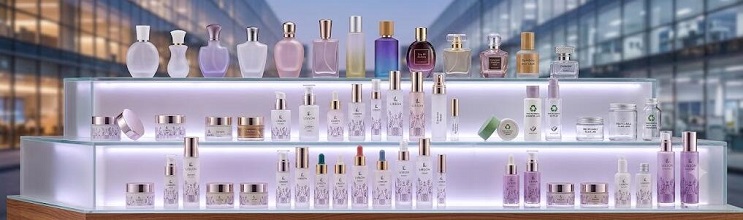
You might run a boutique skincare line and want your bottles to reflect your brand’s story. Lisson has helped many small brands create custom cosmetic glass bottles with a premium look. For example, a startup chose a unique dropper design for their fragrance oil. They worked with Lisson’s engineers to develop custom molds that fit their vision. The minimum order quantity was 10,000 bottles, which balanced cost and flexibility. The team used rapid prototyping to test the design before full production. This approach allowed the brand to launch quickly and stand out on the shelf.
You can achieve a signature look even with a modest budget by collaborating closely with your supplier and using proven mold bases.
If you manage a large cosmetics company, you face different challenges. Lisson’s experience with high-volume projects shows that large-scale production of glass packaging requires careful planning. You need to consider several factors:
Custom molds add tooling costs and require higher minimum orders.
The cost per bottle drops as you increase your order size.
Shipping and breakage can add hidden expenses, so logistics planning is essential.
Factories keep glass furnaces running nonstop. Stopping production for small batches is inefficient. Changing molds leads to downtime, so you need larger runs to justify the switch. This means you must plan for higher volumes to absorb the cost of production changes.
You can learn valuable lessons from these real-world projects:
Start with clear goals for your custom glass bottles.
Work with an experienced custom glass bottle manufacturer like Lisson to navigate mold design and production.
Use rapid prototyping to test ideas before committing to full-scale molds.
Plan for logistics and compliance early to avoid surprises.
Every project, big or small, benefits from strong supplier partnerships and a focus on quality.
You can optimize the cost of custom cosmetic glass bottles by focusing on design efficiency. Start by developing a custom mold that creates a unique product for your fragrance line. Personalized consultations with a custom glass bottle manufacturer help you navigate the packaging process. You may choose wholesale stock shapes and customize decoration, which lowers initial costs. Balancing customization with wholesale strategies allows you to manage expenses. Collaborating with your supplier leads to more cost-effective solutions and ensures your glass packaging meets both creative and technical goals.
Develop a custom mold for unique branding.
Use stock shapes with custom decoration to reduce costs.
Balance customization and wholesale strategies.
Work closely with your supplier for efficient solutions.
Tip: Efficient design choices help you achieve a premium look without overspending.
Negotiating with your supplier can significantly lower mold and tooling costs. Establish long-term agreements to secure discounts on repeat orders. Committing to larger orders distributes the mold cost over more bottles, which improves pricing. Investing in a multi-cavity mold increases output efficiency and reduces per-piece production cost. For high projected volumes, the initial investment pays off with long-term savings. Understanding what influences mold cost helps you budget and negotiate effectively.
Secure discounts with long-term agreements.
Commit to larger orders for better pricing.
Invest in multi-cavity molds for efficiency.
Learn about mold cost factors for informed negotiation.
Note: Strong supplier relationships lead to better deals and reliable glass packaging.
Planning ahead helps you optimize your budget for custom glass bottles. Align your minimum order quantity strategy with demand forecasting and inventory capacity. Bulk ordering can save you money per unit and reduce replenishment costs. Customized stock packaging offers most of the brand differentiation at a fraction of the cost compared to full customization. Consolidate SKUs to cut procurement costs. Simplify decoration strategies to control unit costs. Early packaging planning avoids expensive air freight and supports recyclability goals.
Align MOQ with demand and inventory.
Use customized stock packaging for cost-effective differentiation.
Consolidate SKUs to reduce procurement costs.
Simplify decoration to control expenses.
Plan early to avoid high shipping costs and support recyclability.
Planning ahead ensures your custom glass bottles project stays on budget and meets sustainability targets.
You now understand the main factors that shape the cost of mold design and tooling for glass packaging in cosmetics. Making informed decisions helps you achieve a premium look for your fragrance line while supporting recyclability goals. To optimize your next project, consider these steps:
|
Step |
Description |
|---|---|
|
Consolidate manufacturing |
Work with a single supplier to reduce risks and lower costs. |
|
Utilize in-house tooling |
Choose partners with in-house mold tooling for faster production and better control. |
|
Leverage existing mold libraries |
Use proven molds to minimize new tooling costs and speed up development. |
Consulting with a supplier like Lisson or reviewing your packaging budget can help you unlock savings and bring your vision for custom cosmetic glass bottles to life.
You can start with a minimum order of 10,000 pieces when you work with a custom glass bottle manufacturer like Lisson. This quantity helps you balance flexibility and production efficiency for your brand.
You usually receive 3D prototypes in 72 hours. Full production of custom cosmetic glass bottles takes about 60 to 90 days, depending on design complexity and order size.
Yes, you can choose recyclable glass or PCR materials. Many custom glass bottle manufacturers, including Lisson, offer eco-friendly options to help you meet sustainability goals.
Design complexity, mold material, order volume, and decoration methods all affect the cost. You can lower expenses by using existing mold bases or choosing simpler designs.
You should partner with an experienced custom glass bottle manufacturer. They use strict quality control systems and advanced technology to deliver consistent, premium packaging for your products.
WhatsApp : +86 15099958531
Email : lissontube@gzlisson.com
Phone : +0086 15099958531