You need compatibility testing to protect your skincare formula from unexpected changes or contamination. Without proper testing, you risk instability and possible degradation that can impact both safety and consumer trust. Premium packaging, like Lisson’s Cosmetic Glass Packaging, offers strong protection because glass is chemically inert and does not leach harmful substances. This helps preserve the quality of your product and supports sustainability. By making compatibility a priority, you ensure your formula remains effective and safe for every customer.
Compatibility testing is essential to ensure your skincare formula remains safe and effective in glass packaging.
Choose high-quality glass packaging to protect sensitive ingredients and maintain product integrity.
Regular testing and documentation help catch potential issues early, ensuring consistent quality and safety.
Stay compliant with industry regulations to build consumer trust and protect your brand reputation.
Utilize advanced packaging solutions, like UV protection glass, to enhance product longevity and effectiveness.

Compatibility testing helps you determine how your skincare formula interacts with glass packaging materials. You need this process to ensure that the packaging does not affect the quality, safety, or effectiveness of your product. You evaluate chemical, physical, and biological compatibility to prevent unwanted reactions. This testing protects your formula from changes that could occur during storage, transportation, or use. You maintain the intended characteristics of your skincare product by confirming that the packaging materials remain inert and stable.
Note: Compatibility testing is not just a technical requirement. You use it to safeguard your brand reputation and consumer trust.
Lisson Group specializes in cosmetic glass bottles, including UV protection glass bottles for skincare. Their packaging design incorporates thick walls for insulation, deep grooves for sediment control, and special necks for airtight seals. These features support compatibility by preventing contamination and preserving product integrity. You benefit from their clean workshop and advanced equipment, which produce glass bottles that meet strict quality standards. Lisson Group’s integrated manufacturing process ensures uniformity and supports packaging compatibility testing.
You must prioritize compatibility testing when developing skincare formulas. Skincare packaging needs to protect sensitive ingredients from external factors. Glass packaging offers a chemically inert surface, which reduces the risk of harmful interactions. You simulate real-world conditions during testing to identify any reactions between the formula and the packaging. This process verifies that your product remains stable and effective throughout its lifecycle.
Stability tests assess chemical, physical, and biological interactions. You use these tests to confirm that the formula maintains its physical and chemical integrity. Packaging compatibility testing ensures that your skincare product is safe for consumer use. Lisson Group’s expertise in manufacturing high-quality glass packaging, including UV protection glass bottles for skincare, enhances the reliability of compatibility testing. Their quality control measures, such as automated checks and thermal shock testing, guarantee that the packaging meets strict requirements.
You protect your formula from degradation.
You maintain product safety and hygiene.
You ensure consistent quality for every batch.
You rely on compatibility testing to deliver skincare products that meet consumer expectations. Lisson Group’s advanced packaging design and manufacturing standards help you achieve this goal.
You need to protect your formula from unwanted changes that can occur when it interacts with packaging materials. If you skip compatibility testing, your skincare product may lose its effectiveness or even become unsafe. Sensitive ingredients, such as vitamin C or retinol, can break down when exposed to light, air, or certain packaging surfaces. For example, if you use the wrong container, your formula might discolor, separate, or develop an off-odor. This is why you should always choose packaging design that matches your product’s needs. Lisson Group offers UV protection glass bottles for skincare, which help shield your formula from harmful light and air exposure. These materials keep your product stable and extend its shelf life.
Tip: Always match your packaging to your formula’s sensitivity. This step helps you avoid costly recalls and protects your brand’s reputation.
You may think glass is always safe, but not all glass types behave the same way. When you store skincare products in glass containers, certain conditions can cause the glass to corrode or leach alkaline substances into your formula. Acidic formulas, such as those with fruit acids or vitamin C, can interact with the glass surface over time. This process may release unwanted elements into your product, affecting both safety and performance.
Here is a summary of scientific findings on glass corrosion and alkaline leaching in cosmetic packaging:
|
Glass Type |
Alteration Medium |
Duration |
Key Findings |
|---|---|---|---|
|
Lead Crystal |
Acetic Acid (4%) |
3 years |
Repolymerization of the silicate network observed during alteration. |
|
Soda-Lime |
Acetic Acid (4%) |
3 years |
Alteration rates and depletion of alkalis and earth-alkalis elements impacted by glass composition. |
|
Borosilicate |
Acetic Acid (4%) |
3 years |
Similar hydrolysis rates measured from Si release across different glass structures. |
|
Barium Glass |
Acetic Acid (4%) |
3 years |
Glass composition significantly affects alteration rates in acidic conditions. |
You should select high-quality materials, such as those used in Lisson Group’s essential oil glass dropper bottles, to reduce these risks. Their advanced manufacturing process ensures that the glass remains stable, even with challenging formulas.
Product instability can appear in many ways if you do not perform proper compatibility testing with your intended packaging. You might see changes in color, texture, or even the appearance of particles in your skincare product. In one documented case, a team found that their brightening serum, which contained 15% vitamin C at a low pH, developed unexpected metal content during stability testing. The acidic formula overwhelmed the protective layer of the packaging, leading to contamination. This example shows how skipping compatibility steps can result in expensive reformulation and repackaging.
You can face several consequences if you neglect compatibility:
Chemical resistance problems
Migration issues
Leaching problems
Packaging materials softening or breaking down, such as essential oils affecting plastic bottles
You need to use stability testing with your actual packaging to catch these problems early. Lisson Group’s cosmetic glass bottles and UV protection glass bottles for skincare offer reliable protection, helping you maintain product quality. Their packaging design and choice of materials support long-term stability, so your customers receive safe and effective products every time.
You start compatibility testing with physical assessments. These tests help you observe how your formula interacts with packaging over time. You check for changes in color, texture, or separation. You also look for leaks, cracks, or any deformation in the packaging materials. For example, you might use cosmetic glass bottles or an essential oil glass dropper to see if the packaging design supports long-term stability.
You may notice that body scrubs, creams, or lotions show signs of degradation if the packaging does not match the formula.
Physical changes, such as clumping or separation, can make your product less attractive to customers.
You use these observations to adjust your packaging development process and select purpose-built packaging that fits your product.
Physical assessments give you early warnings about packaging issues. You can then use this information to improve your packaging technology and ensure your products remain appealing and safe.
You need chemical and microbiological analysis to confirm that your packaging materials do not react with your skincare formula. Chemical testing checks for leaching, migration, or unwanted reactions. Microbiological testing ensures that the packaging keeps your product free from contamination. You use material analysis to detect any changes in the formula caused by the packaging.
Specialized tests for glass packaging, such as alkaline leaching, are important for sustainable materials. You can see the main tests in the table below:
|
Test Name |
Purpose |
Methodology |
|---|---|---|
|
Powdered Glass Test |
To estimate the amount of alkali leaching from glass under extreme conditions. |
Glass is crushed, washed, heated in water at 121°C, and titrated with sulfuric acid to measure alkali leached. |
|
Water Attack Test |
To determine alkali resistance of glass containers for pharmaceutical use. |
Glass containers are immersed in water at 121°C for 30 minutes, and the leached alkali is quantified through titration. |
You use these tests during performance testing to ensure your packaging supports product safety and quality. You also confirm that your packaging development process uses the best materials for your skincare products.
Tip: Always include chemical and microbiological assessments in your compatibility testing plan to avoid costly recalls and protect your brand.
You need clear criteria to determine if your compatibility process has succeeded. Successful compatibility means your packaging materials do not react with your skincare formula in a way that could harm safety, integrity, or efficacy. You should check for stability in pH, color, and the active ingredients over time. If your cosmetic glass bottles or UV protection glass bottles for skincare keep the formula unchanged, you can trust the packaging. You also want to see that preservatives and other ingredients remain stable and do not interact with the packaging. This helps you predict shelf life and avoid costly changes later.
Here are the main points you should monitor during compatibility testing:
No significant pH shifts or color changes
Active ingredients remain stable and effective
Packaging materials do not leach substances into the formula
The integrity of the product and packaging stays intact
No loss of product performance or appearance
You should use these criteria to guide your selection of sustainable materials and luxury skincare packaging. Lisson Group designs packaging to meet these high standards, helping you protect the integrity of your products.
You must watch for signs that your packaging and formula do not work well together. If you see visual changes, such as separation, discoloration, or particles, this signals a problem. You may also notice changes in texture or a drop in product performance. Sometimes, the packaging itself may show cracks or leaks, which means the integrity of the packaging is at risk.
Common indicators include:
Visual inconsistencies or unexpected changes in the product
Shifts in layout or separation of ingredients
Performance drops, such as reduced absorption or altered texture
High error rates in product quality during different storage conditions
If you detect any of these issues, you should act quickly. Stop distribution, investigate the root cause, and work with your supplier to fix the problem. You may need to retest with a new batch or update your quality control process. Using high-quality packaging, such as an essential oil glass dropper from Lisson Group, helps you avoid these risks and maintain the integrity of your luxury skincare products.
Tip: Always document your findings and corrective actions. This protects your brand and ensures your products meet the highest standards.
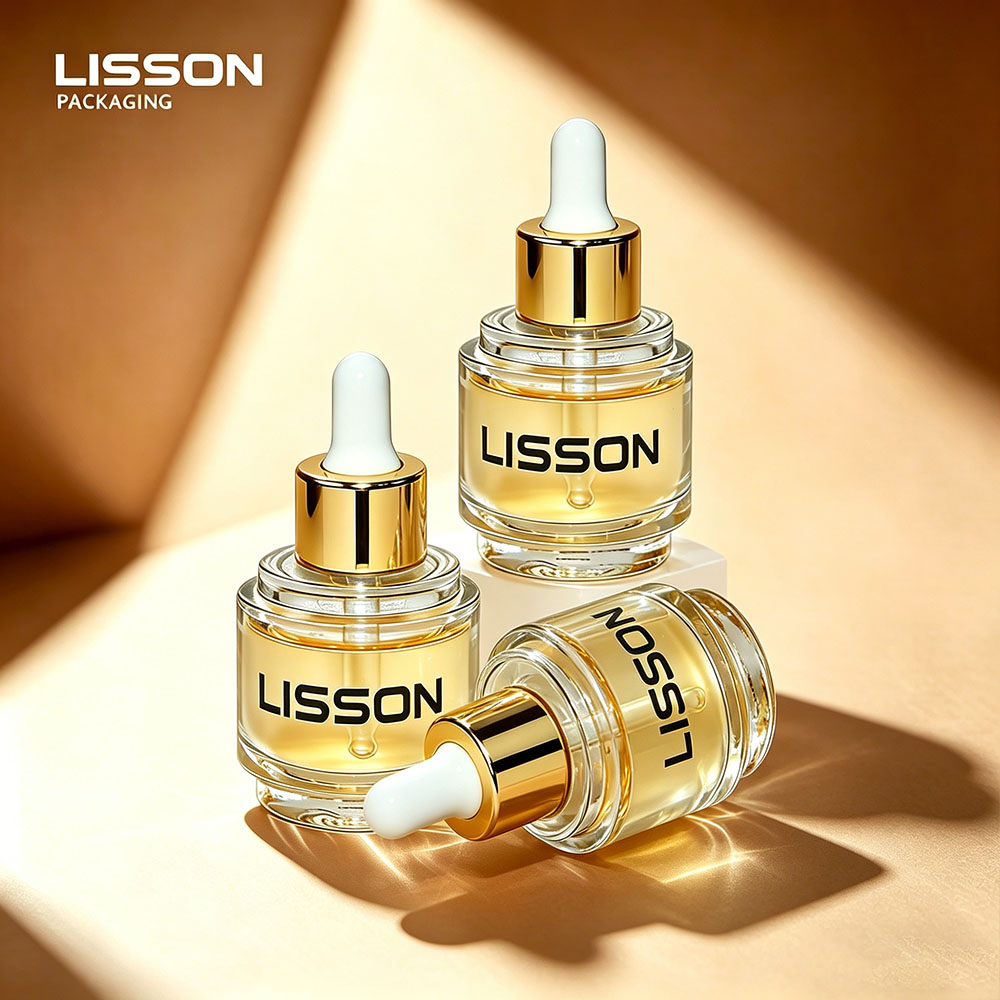
You should choose glass packaging that protects your skincare formula and supports your brand image. Glass is non-porous and impermeable, so it maintains product quality and purity. It is also fully recyclable, which appeals to eco-conscious consumers. Glass packaging adds a sense of luxury and sophistication to your products. You need to consider several factors when selecting high-quality glass packaging:
Product compatibility: Glass works well with sensitive ingredients that may react with plastic.
Sustainability: Glass is 100% recyclable and reusable.
Durability: Glass must withstand handling and environmental changes.
Brand aesthetic: Glass enhances the look and feel of your products.
Safety: Glass resists chemical leaching, keeping your formula pure.
Dimensional accuracy: Precise design ensures both function and visual appeal.
You can rely on reputable suppliers like Lisson Group for cosmetic glass bottles, UV protection glass bottles for skincare, and essential oil glass droppers. Their advanced manufacturing and strict quality control help you avoid visual imperfections and maintain product integrity.
You need to implement routine compatibility testing for every new formula and packaging combination. Regular testing helps you catch issues early and ensures your products remain safe and effective. You should document all test results, including patch tests, repeat open application tests, and in vitro skin models. These methods provide reproducible data on how your formula interacts with packaging materials and ingredients. Good documentation supports formulation refinement and helps you identify risks before products reach the market.
Tip: Keep detailed records of every compatibility test. This practice helps you track changes, improve quality, and minimize reformulation costs.
You must follow all relevant regulations for skincare packaging and product safety. Regulatory compliance ensures your products meet industry standards and protects your brand from legal risks. You should stay updated on guidelines for packaging materials, labeling, and product claims. Lisson Group’s turnkey services and commitment to eco-friendly materials make it easier for you to achieve compliance. Their in-house R&D and flexible solutions support your efforts to meet both safety and sustainability goals.
Note: Prioritizing regulatory compliance builds trust with consumers and strengthens your brand reputation.
You protect your skincare formulas and build consumer trust when you prioritize compatibility testing with glass packaging. By choosing solutions like cosmetic glass bottles, UV protection glass bottles for skincare, and essential oil glass dropper options from Lisson Group, you support product safety and enhance user experience. The table below shows the long-term benefits for your brand:
|
Benefit |
Description |
|---|---|
|
Product Integrity |
Your product stays stable and effective over time. |
|
Consumer Safety |
You ensure safe use for your customers. |
|
Brand Reputation |
You show your commitment to quality and safety. |
|
Regulatory Compliance |
You meet industry standards and reduce legal risks. |
Keep evaluating your formulas and packaging as trends and needs change. This approach helps you maintain high standards and meet customer expectations.
Compatibility testing checks if your skincare formula stays safe and stable in its packaging. You use this process to make sure cosmetic glass bottles or UV protection glass bottles for skincare do not change your product.
You choose glass packaging because it is non-reactive and protects your formula. Cosmetic glass bottles and essential oil glass droppers from Lisson Group help keep your skincare products pure and effective.
UV protection glass bottles for skincare block harmful light. You use these bottles to prevent sensitive ingredients from breaking down, which keeps your product fresh and active.
Lisson Group offers high-quality cosmetic glass bottles and essential oil glass droppers. You get advanced design, strict quality control, and sustainable materials that support both safety and brand image.
You should test every time you create a new formula or change packaging. This step helps you catch problems early and ensures your skincare stays safe for your customers.
WhatsApp : +86 15099958531
Email : lissontube@gzlisson.com
Phone : +0086 15099958531