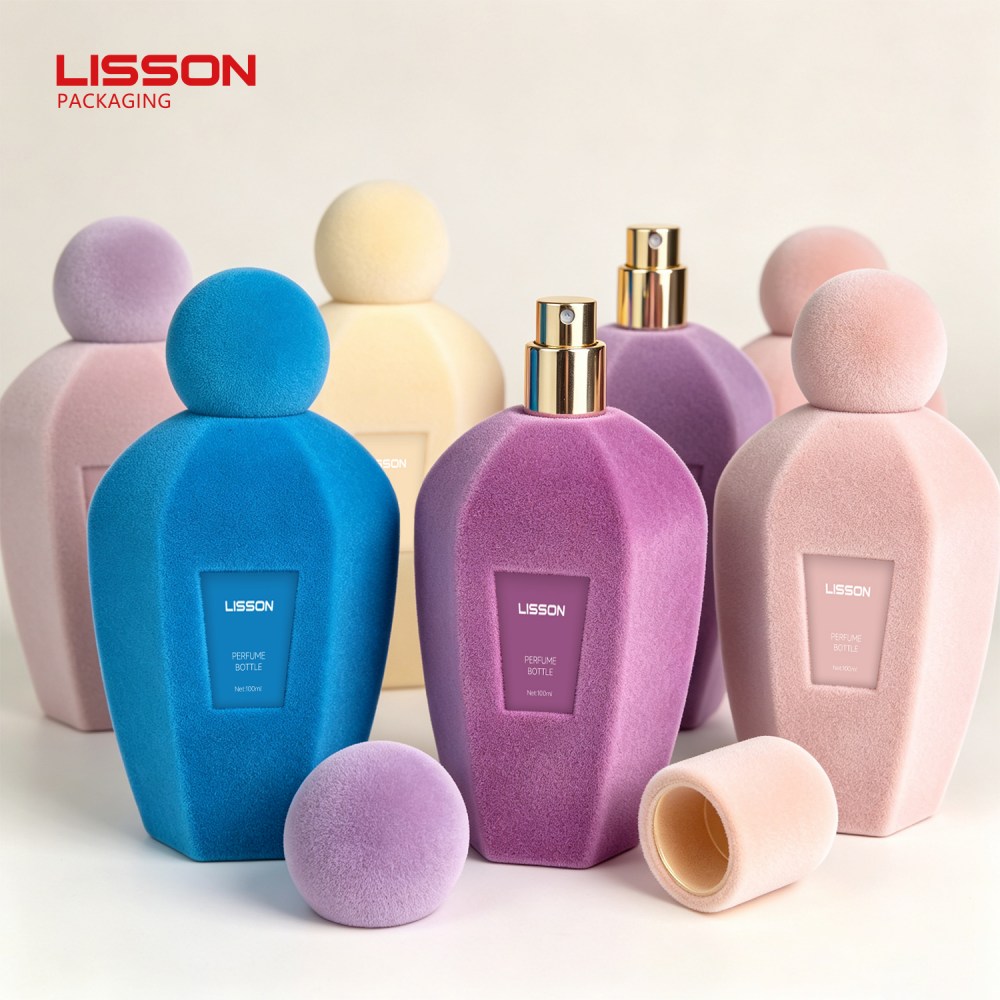
How to Choose the Perfect Cap and Spray Pump for Your Glass Perfume Bottle
Aug 07, 2026
Selecting the ideal closure system for your Glass Perfume Bottle requires a balanced evaluation of technical specs and design aesthetics. You must align engineering precision with visual appeal to guarantee product performance.
Core Selection Criteria:
Engineering Specs: Verify standard FEA neck sizes, secure pump mechanisms, controlled dosage outputs (0.08–0.12 ml), and leak-proof gasket seals.
Aesthetic Balance: Pair cap weight, material quality, and custom finishes directly with your container profile.
Balancing these critical factors prevents fragrance evaporation, stops leaks, and elevates your overall product presentation.
Key Takeaways
Match your pump size to the bottle neck precisely to create an airtight seal and prevent leaks.
Choose dip tubes with angled or V-cut ends to draw out every drop of perfume easily.
Select spray pumps with outputs between 0.08 ml and 0.12 ml for the best mist application.
Use durable cap materials like Surlyn or metal to protect against alcohol damage and cracking.
Matching Spray Pumps to Your Glass Perfume Bottle
Achieving a flawless closure system requires precise alignment between your pump mechanism and the container neck. You must treat the bottle neck and pump mechanism as a single engineered unit.
Confirming Neck Diameter and FEA Sizing
When you source a Glass Perfume Bottle, you must verify the industry-standard FEA (Fédération Européenne de l'Aérosol) neck finish size. Standard options include FEA 13, FEA 15, FEA 18, and FEA 20. Precise neck specifications guarantee an airtight seal and prevent structural failures.
Critical Dimensional Tolerances:
0.1 mm Variation: A tiny 0.1 mm deviation in neck finish degrades the airtight seal and causes rapid scent loss.
0.2 mm Bore Deviation: A 0.2 mm internal diameter discrepancy disrupts dip tube placement and ruins seal performance.
0.3 mm Undersized Neck: Creates a loose fit that allows fluid to leak during transit.
0.3 mm Oversized Neck: Blocks the spray pump assembly from entering the bottle neck completely.
You should always request full technical drawings from your glass manufacturer. Matching your pump ferrule to the exact FEA standard eliminates manufacturing delays and assembly line failures.
Sizing Dip Tube Length and Cut Geometry
The dip tube must reach the lowest point of your container to draw out every drop of liquid. Measure the internal height from the neck base to the bottom center of your luxury glass perfume bottle.
Dip tube cut geometry directly dictates fluid uptake efficiency:
V-Cut Ends: Prevent the tube from sealing flat against the container bottom, ensuring uninterrupted fluid draw.
Notched Angle Cuts: Allow maximum formula suction even when the dip tube touches the glass base.
Straight Cuts: Risk resting flush against smooth glass bottoms, which blocks liquid flow and causes pump failure.
A tube that is too long will bend excessively inside the bottle, distorting the aesthetic presentation. A tube that is too short leaves unused formula at the bottom, frustrating your end consumers.
Preventing Evaporation with Proper Gasket Seals
High-grade gasket seals create the ultimate barrier against air exchange. Your choice of liner material directly affects product shelf life and formula stability.
A misaligned collar or defective gasket ruins formula integrity over time. Consider these technical impacts:
Undersized External Locking Rings: Prevent crimping machinery from folding the aluminum ferrule tightly onto the glass neck. This breaks the vacuum seal and causes fluid evaporation and oxygen ingress.
Gasket Material Compatibility: Select high-density polyethylene (HDPE) or synthetic rubber gaskets based on your fragrance oil and alcohol concentration.
Proper sealing technology preserves fragrance notes, stops chemical degradation, and protects your Glass Perfume Bottle from gradual scent loss during storage. Testing seal integrity under pressure ensures your glass fragrance bottle survives altitude changes during air freight.
Selecting the Right Spray Pump Mechanism and Dosage
Selecting the right pump mechanism defines how your customer experiences your fragrance. You must evaluate mechanical security, assembly speeds, and precise liquid delivery to match your brand positioning.
Comparing Crimp-On, Screw-On, and Press-Fit Mechanisms
Your manufacturing workflow dictates the ideal pump attachment method. Each mechanism offers distinct advantages regarding assembly speed and permanent tamper resistance.
Pump Type
Assembly Speed
Tamper Resistance
Crimp-on
High-speed automated throughput suitable for large-scale production runs.
Superior tamper-proof security; irreversible attachment prevents unauthorized opening or refilling.
Screw-on
Slower rotational assembly (though coarse threads offer faster attachment than fine threads).
Low; easily removable, allowing potential product access and lacking permanent tamper protection.
Press-fit (Snap-on)
Very fast push-to-install mechanism that significantly reduces production time relative to rotational methods.
Moderate to limited; easier to detach compared to crimp-on systems, making it less ideal for high-security needs.
High-volume luxury brands often select crimp-on pumps. The permanent aluminum ferrule crimp seals the container completely. This structure prevents product tampering and guards your proprietary formula against counterfeiters.
Screw-on pumps allow easy refillability for eco-conscious product lines. However, manual or rotational machine assembly slows down overall packaging throughput. Press-fit pumps offer a balanced middle ground. They install rapidly on high-speed pneumatic lines without complex crimping tools.
Calibrating Fine Mist Output Between 0.08 ml and 0.12 ml
Liquid dosage output between 0.08 ml and 0.12 ml represents the standard benchmark for fine fragrances. Within this range, the pump delivers a satisfying mist application that enhances consumer perception without wasting product. Pump output directly influences perceived product value and product lifespan. For instance, a 0.10 ml pump on a 50 ml Eau de Parfum bottle yields roughly 500 actuations. Consumers view this output volume as excellent product longevity. Higher output dosages can prematurely drain a Glass Perfume Bottle, undermining marketing claims about product endurance.
Pump Dosage
Sprays per 30ml
Sensory Impression
30ml Bottle Lifespan (at 4 sprays/day)
0.08 ml
~375 sprays
Moderate fine mist
~93 days
0.10 ml
~300 sprays
Common industry benchmark
~75 days
0.12 ml
~250 sprays
Fuller, generous mist
~62 days
Dosage Selection Tip: Choose a 0.08 ml output for concentrated Extrait de Parfum lines to prevent overpowering initial application. Reserve 0.12 ml pumps for lighter Eau de Toilette or body mists that benefit from broader, wetter application coverage.
Evaluating Atomization Spray Patterns and Coverage
Engineers measure physical spray mechanics to guarantee consistent atomization quality across production batches. You must evaluate plume angles and particle sizes to create a luxurious cloud sensation.
Parameter Measured
Measurement Techniques & Tools
Key Metrics / Observed Phenomena
Droplet Size Distribution
Laser diffraction methods & Phase-Doppler particle analysis
Mass Median Diameter ($D_{v50}$/MMD), Sauter Mean Diameter (SMD), and span (geometric standard deviation)
Spray Plume Angle & Geometry
Actuation against a reactive surface at a fixed distance & High-speed optical camera imaging
Plume diameter/circle size, jet breakup dynamics, spray pattern uniformity, and detection of heavy droplets/irregularities
Optimal skin coverage and enhanced fragrance longevity require a mean droplet diameter ranging from 25 to 40 μm. Large droplets over 50 μm cause wet liquid runs on skin, while ultra-fine particles under 20 μm drift away in room air currents.
Formulations incorporating 3–5% Dipropylene Glycol (DPG) produce refined atomization within this target range. These formulas significantly improve spray consistency compared to larger 35–55 μm droplet sizes generated by formulations lacking DPG. Matching your engine insert orifice to your formula viscosity ensures a uniform plume angle every single time.
Choosing Cap Materials for a Glass Perfume Bottle
Your closure choice determines the tactile and visual prestige of your product. You must balance the physical mass of the cap with the proportions of your container.
Matching Cap Material and Visual Weight to Bottle Design
Pairing heavy, thick-bottomed glass containers with substantial, weighted closures creates an immediate sense of luxury. A light cap on a heavy base feels cheap to buyers. Aligning cap contours with bottle shoulders guarantees strong tactile ergonomics:
Linear Symmetry (Square-on-Square): For rectangular closures paired with faceted bottles, align the cap corners flush with the bottle shoulders or scale them using a precise geometric ratio.
Ergonomic Flow (Round-on-Round): For cylindrical bottles, match the outer diameter of the cap directly to the external diameter of the neck shoulder to create a seamless vertical profile.
Evaluating Surlyn, Metal, Wood, and Plastic Caps
Different materials express distinct brand identities. You must evaluate structural benefits alongside visual appeal:
Material
Key Aesthetics
Functional Benefits
Surlyn
High clarity, glass-like transparency
Chemical resistance, shatterproof, tight friction fit
Metal (Zamak)
Weighted, cool-to-touch luxury
Superior durability, high premium impression
Wood
Natural, organic textures
Sustainable appeal, unique visual grain
ABS / PP Plastic
Versatile, cost-effective finishes
Lightweight, budget-friendly manufacturing
Leading packaging providers like lissong manufacture premium Surlyn and metal closures engineered specifically for every Glass Perfume Bottle design.
Preventing Cap Cracking and Material Deterioration
High concentration fragrance oils and alcohol can weaken low-grade plastic caps. Concentrated chemical vapors cause internal stress cracking and loosen outer fit rings over time.
Material Quality Tip: Select resin formulas with proven chemical inertness. High-grade inner liners prevent stress corrosion cracking and preserve a firm, satisfying click over thousands of uses.
Using durable inner inserts shields the cap shell from direct perfume exposure, ensuring a long-lasting, secure seal.
Ensuring Leak-Proof Performance and Custom Finishes
Testing Leak-Proof Technology Under Pressure
Fragrance formulations expand and contract during air transport and climate changes. You must subject every closure assembly to rigorous pressure decay testing. Standard vacuum leak tests simulate extreme pressure drops inside airplane cargo holds.
Quality Standard: Subject your assembled components to -0.7 bar vacuum pressure for 15 minutes. This test guarantees that your packaging maintains airtight integrity during international distribution.
A resilient seal safeguards your formula from leakage during daily handling. Testing your components prevents costly product returns and protects your brand reputation.
Customizing Finishes in Gold, Silver, Matte, and Glossy
Surface treatments transform standard closure hardware into distinctive brand assets. You can select anodized aluminum, electroplated gold, brilliant silver, or tactile matte finishes to elevate your product line.
Anodizing builds an alcohol-resistant oxide layer over metal caps and pump collars. This barrier prevents surface tarnishing caused by direct contact with fragrance oils. Glossy UV coatings offer high visual shine, while soft-touch matte sprays provide modern tactile appeal. Matching these finishes across your pump components creates a cohesive look.
Aligning Packaging Aesthetics for Travel and Luxury Lines
You must tailor your packaging hardware to match your target price point. Distinct design features distinguish high-end collection caps from portable travel sprays.
Design Category
Luxury Perfume Closures
Mass-Market Travel Fragrance Packaging
Material & Tactile Feel
High-density metals (e.g., Zamac zinc alloy, aluminum) provide significant weight and a cool touch.
Lightweight plastic feels basic and flimsy.
Mechanism & Functionality
Magnetic or snap-fit systems deliver an audible click and self-guiding closure.
Basic friction lids offer simple push-on attachment.
Finishes & Customization
Advanced electroplating (24K gold, silver), laser engraving, and 3D embossing.
Simple plastic coatings prone to peeling when exposed to alcohol.
Quality & Durability Testing
Rigorous alcohol rub and salt spray testing guarantee long-term surface resilience.
Lacks advanced surface treatments, making coatings vulnerable to fragrance damage.
Selecting premium Zamac closures for your luxury Glass Perfume Bottle line maximizes shelf impact. Meanwhile, durable aluminum travel shells protect smaller glass fragrance bottle formats on the go.
You must evaluate your spray pump, cap, and Glass Perfume Bottle as a single integrated system. High-grade, leak-proof closures protect delicate scent formulations, prevent fluid loss during shipping, and elevate your brand prestige.
Actionable Next Step: Always validate physical production samples before launching mass manufacturing.
Fragrance brand managers should execute key pre-production validation checks:
Packaging Material Compatibility: Store formulations in final containers for 30–60 days to verify zero material degradation or stress cracking.
Leak and Seal Integrity: Subject filled units to vacuum pressure and temperature cycles to simulate transport conditions.
Pump Dosage Accuracy: Conduct repeated actuations to confirm consistent spray weight and plume geometry.
FAQ
How do you select the right FEA neck size for your container?
Measure your container neck finish precisely and match it to standard FEA sizes like FEA 15 or FEA 18. Always request detailed technical drawings from your glass manufacturer. Matching these dimensions guarantees an airtight seal and prevents fluid leakage.
What pump dosage output works best for fine fragrances?
Choose a dosage output between 0.08 ml and 0.12 ml. A 0.08 ml output suits highly concentrated extraits, while 0.10 ml serves as the standard industry benchmark. This range creates a luxurious spray plume without wasting precious liquid.
Why should you choose a crimp-on pump over a screw-on pump?
Key Insight: Crimp-on pumps deliver permanent tamper resistance and maximum leak protection during high-speed production.
Screw-on pumps allow easy refills, but crimp-on mechanisms establish a permanent vacuum seal that shields sensitive fragrance notes against oxidation and evaporation.
How do you prevent chemical cracking on custom caps?
Select cap closures featuring high-grade protective inner liners and chemical-resistant materials like Surlyn or Zamac. These durable liners block alcohol vapors, preventing surface tarnishing and structural cracking over time on your Glass Perfume Bottle.